No Buttermilk? Here’s the UK Substitute That Actually Works
As an Amazon Associate I earn from qualifying purchases and sometimes recommend products from other sellers at no extra cost you. For more details see my disclosure policy and privacy policy.
If you’ve ever stood in the baking aisle looking for buttermilk and come away empty-handed, you’re not imagining things. It’s not a fridge staple here the way it is in the US, and most UK recipes just quietly assume you’ll work around it.
The good news is that a substitute takes minutes to make with things already in your kitchen, and it works properly for both fried chicken and cornbread once you know why buttermilk is doing its job in each one.
What buttermilk is actually doing in the recipe
Buttermilk isn’t in a recipe just for the tang. It’s doing real chemical and textural work, and that work is different depending on what you’re cooking.
In fried chicken, buttermilk is a marinade. It’s mildly acidic, so it gently breaks down the proteins in the chicken over time, which is part of what makes the meat so tender under that crust. It also seasons the meat from the inside and gives the coating something to cling to.
In cornbread, buttermilk is a raising agent as much as a liquid. Its acidity reacts with the bicarbonate of soda in the batter, producing carbon dioxide bubbles right there in the mix. That’s what gives cornbread its lift and a lot of its soft crumb, alongside any baking powder in the recipe.
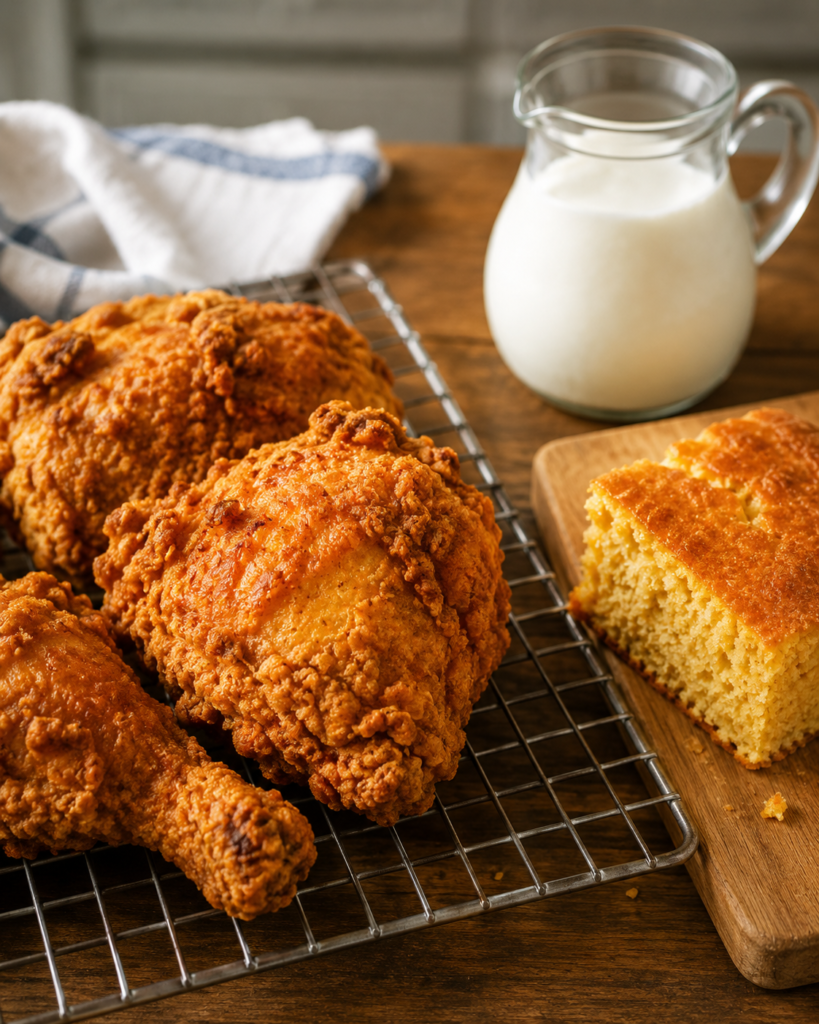
That’s the key thing to hold onto: one use is about time and tenderising, the other is about an immediate chemical reaction. It changes how you should make your substitute for each.
The UK availability reality check
To be clear, buttermilk isn’t impossible to find in the UK. Sainsbury’s, Tesco, Waitrose and Morrisons all stock it in the fresh dairy aisle, usually as a small carton (around 300ml) or a larger bottle from a brand like Dale Farm.
The catch is that it’s not stocked everywhere, it’s often tucked away near the cream and crème fraîche rather than with the milk, and smaller supermarkets or convenience stores are unlikely to carry it at all. If you’ve got a big supermarket nearby and want the real thing, it’s worth a look.
For everyone else, or for anyone who just doesn’t want a special trip for 300ml they’ll use once, the homemade version below does the job. For more on tracking down harder-to-find soul food ingredients generally, our guide to where to buy soul food ingredients in the UK covers supermarkets, online options and Afro-Caribbean shops.
The standard substitute: milk and acid
This is the one to remember, because it covers most recipes calling for buttermilk, fried chicken and cornbread included.
- Ratio: 250ml whole milk to 1 tablespoon lemon juice or white vinegar (roughly a US cup to a tablespoon, if you’re working from an American recipe)
- Method: stir the acid into the milk and leave it at room temperature
- Rest time: 5-10 minutes, until it looks slightly thickened and a bit curdled at the surface
Whole milk works better than semi-skimmed here, since the extra fat gets you closer to real buttermilk’s body. White vinegar is more neutral in flavour, while lemon juice adds a faint citrus note that most people can’t detect once it’s mixed into a marinade or batter.

Adjusting it for each recipe
This is the bit most substitute guides skip, and it’s the difference between a substitute that works and one that just sort of does.
For the fried chicken marinade, you’ve got room to be relaxed about timing. Since the acid’s job here is to slowly tenderise the chicken over an hour or more in the fridge, a slightly longer souring time before you add the chicken won’t hurt anything. If your kitchen is a bit cool, let it sit closer to 10-15 minutes so it’s properly soured before the chicken goes in.
For cornbread, timing actually matters more, not less. The acid needs to be freshly reacting with the milk’s proteins right when you mix it into the batter, because you want that acid still active when it meets the bicarbonate of soda. Make your substitute right before you start mixing the batter, not while you’re still measuring out everything else. Soured milk that’s sat around too long loses some of its punch, and a flatter cornbread is usually the result.

Closer alternatives: yoghurt and kefir
If you want something nearer to real buttermilk in flavour and texture, especially for the marinade, two options are worth having in the fridge:
- Natural yoghurt thinned with milk: whisk plain natural yoghurt with a splash of milk until it’s pourable, roughly the consistency of double cream. The natural tang is close to buttermilk and it clings well to chicken for marinating.
- Kefir: if you already keep kefir in the house, it’s a genuinely excellent stand-in as it is, with no thinning needed for most uses. It’s tangier and thinner than yoghurt, which puts it closer to real buttermilk than almost anything else on this list.
Both work for cornbread too, though the milk-and-acid method is still the more reliable one for getting a proper rise, since you’re controlling the acid level directly rather than relying on however tangy your yoghurt happens to be.
Putting it to use
Once you’ve got your substitute ready, it’s just a case of using it exactly where the recipe calls for buttermilk. Our Traditional Southern Fried Chicken recipe walks through the full marinating and frying method, including UK substitutions for a few other harder-to-source ingredients. If you’re frying at home, a heavy-bottomed pan built for even heat makes a genuine difference to how evenly the chicken cooks, and a clip-on thermometer takes the guesswork out of oil temperature.
For the other side of this post, our Cornbread Recipe is where the freshly-soured milk version of this substitute earns its keep, giving you that proper lift without a trip to the shops for a carton you’ll use once.