The Holy Trinity in Cooking: The Secret Behind So Much Soul Food
As an Amazon Associate I earn from qualifying purchases and sometimes recommend products from other sellers at no extra cost you. For more details see my disclosure policy and privacy policy.
If you’ve spent any time reading about Southern cooking, Cajun food, or Creole cuisine, you’ve probably come across the term “the holy trinity.” It sounds mysterious — maybe even a little dramatic — but it’s one of the most practical concepts in the whole of Southern cooking. Once you understand it, you’ll start spotting it everywhere.
The holy trinity is simply three vegetables: onion, celery, and green bell pepper. That’s it. These three humble ingredients form the aromatic base for countless Southern and Cajun dishes, and getting familiar with them will genuinely change how you approach cooking this kind of food. If you’ve ever made a pot of seafood gumbo and wondered why it tastes so deeply flavoured even before you’ve added anything fancy, the holy trinity is almost certainly the reason.

What Is the Holy Trinity in Cooking?
The holy trinity is the foundational flavour base used in Cajun and Creole cooking — the Southern equivalent of what French cooking calls a mirepoix (carrots, celery, and onion). The difference is that green bell pepper takes the place of carrot, which gives Southern cooking its distinctive flavour profile. Slightly sweet, earthy, and savoury all at once.
These three vegetables are almost always cooked together at the start of a dish, usually softened in butter or oil before anything else goes in. Think of them as the flavour foundation everything else is built on.
Where Does the Holy Trinity Come From?
The term is most closely associated with Louisiana cooking — specifically Cajun and Creole cuisine, both of which have their roots in the rich, multicultural food culture of New Orleans and the surrounding parishes. The name itself is a nod to the region’s deeply Catholic heritage, where the idea of a sacred trio felt like a natural fit.

Culinary legend has it that the late Chef Paul Prudhomme — one of the most influential figures in bringing Cajun cuisine to a national audience — helped popularise the term. Whether or not he coined it, his cooking and writing cemented the holy trinity as a proper culinary concept rather than just common kitchen practice.
The Ratio: Does It Matter?
You’ll sometimes see the holy trinity described with a specific ratio — typically 2 parts onion to 1 part celery to 1 part bell pepper. In practice, most cooks adjust based on what they have and what they’re making. For a big pot of gumbo, you might use two large onions, four stalks of celery, and two bell peppers. For a smaller jambalaya, scale it back.
The ratio matters less than the principle: all three vegetables should be present, and they should be cooked down properly before you add anything else. That’s where the magic happens.
The Three Ingredients, Explained
Onion
Onion is the backbone of the trinity and usually makes up the largest proportion. Yellow onions are most common in Cajun cooking, but white onions work well too. When you cook onion slowly in fat, it releases its sugars and becomes sweet and soft — that gentle sweetness underpins almost everything you build on top of it.
For a deeper, slightly sweeter flavour, some cooks use Vidalia onions, which are a sweeter variety worth seeking out if you can find them. If you’re cooking in the UK and can’t get Vidalias easily, a good-quality yellow onion works perfectly.
Celery
Celery brings an earthy, slightly bitter note that balances the sweetness of the onion. It also adds a subtle crunch in the early stages of cooking before it softens down completely. Don’t skip it — dishes made without celery often taste flatter than you’d expect, even if you can’t quite put your finger on why.
One thing worth knowing: in Cajun cooking, the celery leaves are often used alongside the stalks. They have a more intense flavour and are worth throwing in if your celery still has the leafy tops attached.
Green Bell Pepper
This is the ingredient that makes the Southern holy trinity distinct from its French counterpart. Green bell pepper has a slightly grassy, vegetal flavour that softens considerably with cooking. It provides colour, a gentle bitterness, and a flavour note that’s unmistakably Southern.
Red, yellow, or orange bell peppers can be substituted in a pinch, but they’re sweeter and will change the character of the dish. For authentic Cajun flavour, green is the one to use.
The Holy Trinity vs. Mirepoix: What’s the Difference?
This comes up a lot, and it’s worth addressing clearly. Both the holy trinity and the French mirepoix are aromatic vegetable bases used to build flavour in a dish — the principle is the same. The key differences are:
- Mirepoix uses carrots, celery, and onion. The carrot adds sweetness and a slight earthiness.
- The holy trinity swaps carrot for green bell pepper, which introduces that distinctive grassy, Southern flavour.

The result is that dishes built on mirepoix tend to taste more European in character, while dishes built on the holy trinity have that unmistakable Southern depth. This is part of why soul food tastes the way it does — the foundations are genuinely different from European comfort food traditions.
What About “The Pope”?
You might occasionally see references to “the holy trinity and the pope” in Cajun cooking. The pope, in this context, is garlic — added to the trinity to round everything out with a deeper, more pungent flavour. Many cooks add garlic as a matter of course, and if you’re making something like a rich gumbo or jambalaya, it makes a noticeable difference. Just add it after the trinity has had a chance to soften, as garlic burns quickly and can turn bitter.
How to Cook the Holy Trinity
The technique here is simple, and getting it right makes a real difference to the finished dish.
Start by dicing your vegetables roughly evenly — you want them to cook at a similar rate. Heat your fat (butter for a richer flavour, oil for a neutral base, or a combination of the two) in a heavy-bottomed pan over medium heat. Add the vegetables, stir to coat, and then leave them mostly alone. You’re looking for them to soften and become translucent, not to brown.
This process usually takes around 8 to 12 minutes, depending on how fine your dice is and how hot your pan runs. Don’t rush it by turning the heat up — slow, gentle cooking coaxes out the sweetness and prevents anything from catching on the bottom. Once the trinity is soft and fragrant, you’re ready to build the rest of your dish on top.
Can You Prep It in Advance?
Absolutely, and it’s one of the most useful things you can do for weeknight cooking. Dice your onion, celery, and bell pepper, mix them together, and store in an airtight container in the fridge for up to three days. You can also freeze the raw mix in portions — lay it flat in freezer bags and it’ll keep for up to three months. Frozen trinity goes straight into the pan from frozen; just cook it a little longer than usual to drive off the excess moisture.
What Dishes Use the Holy Trinity?
Once you start looking for the holy trinity in recipes, you’ll find it almost everywhere in Southern and Cajun cooking. Here are the most common dishes where it forms the base:
- Gumbo — arguably the most famous Cajun dish, where the holy trinity is cooked in the roux (a mixture of flour and fat) that gives gumbo its thick, complex base. Our seafood gumbo is a good place to start if you want to see it in action.
- Jambalaya — the trinity goes in first, then rice, protein, and stock are added. If you’re wondering what jambalaya actually is, the holy trinity is central to understanding it.
- Étouffée — a buttery, saucy Cajun dish usually made with crawfish or shrimp, where the trinity provides the flavour backbone.
- Red beans and rice — a Monday staple in New Orleans, where the trinity is cooked down with red kidney beans and usually some andouille sausage.
- Dirty rice — a deeply flavoured rice dish where the trinity mingles with chicken livers, ground meat, and spices.
- Cajun shrimp dishes — if you’ve made something like a Cajun shrimp skillet, you’ve almost certainly used a version of the holy trinity, even if it wasn’t labelled as such.

It also turns up beyond strictly Cajun and Creole cooking — many Southern cooks use it as a base for stews, soups, and braised meats, even when the recipe doesn’t name it explicitly.
Is the Holy Trinity a Soul Food Thing?
This is a fair question, and the honest answer is: yes and no. The holy trinity is specifically a Cajun and Creole cooking concept — it’s rooted in Louisiana food culture. Soul food has a broader geography, encompassing the cooking traditions of African Americans across the American South, particularly dishes developed during and after the era of slavery.
That said, there’s significant overlap between soul food and Cajun/Creole cooking, particularly when it comes to dishes like gumbo and red beans. Many of the core soul food dishes — collard greens, fried chicken, cornbread — don’t use the holy trinity, but plenty of the deeply saucy, slow-cooked soul food dishes do rely on onion, celery, and bell pepper as a starting point, even if they’re not called the holy trinity by name.
If you’re learning about collard greens or soul food ribs, you might not see the trinity listed explicitly — but the underlying logic of building flavour through aromatics is very much part of the same cooking tradition.
Using the Holy Trinity as a British Cook
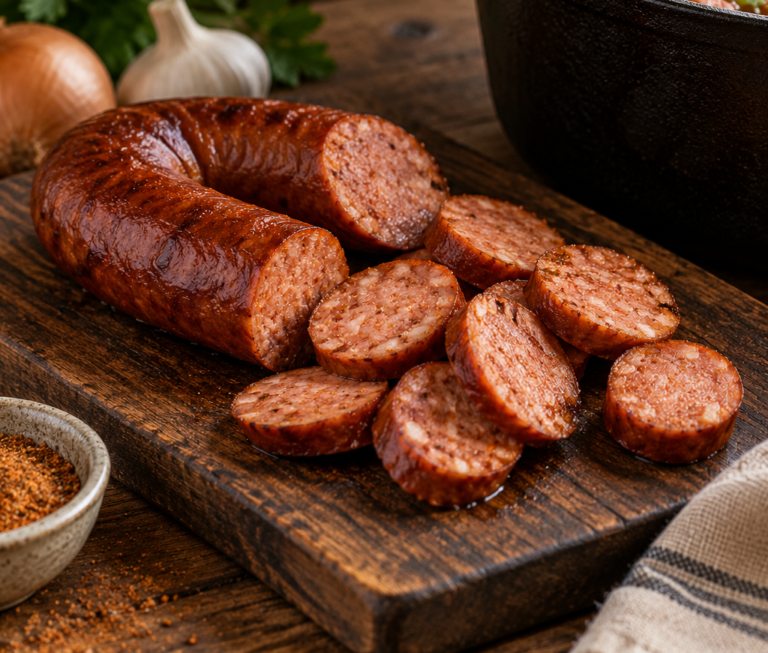
One thing I’ve found learning this style of cooking in a British kitchen is that these three ingredients are genuinely easy to source here. Green bell peppers, celery, and onions are in every supermarket, every week of the year. Unlike some Cajun ingredients — andouille sausage, Creole seasoning, or file powder — the holy trinity needs no substitution and no specialist shopping.
If anything, having good-quality British celery (which tends to have a stronger flavour than some American varieties I’ve read about) is an advantage. The key is just not to skip any of the three, and to give them the time they need in the pan before you move on.
Frequently Asked Questions
What exactly is the holy trinity in cooking? The holy trinity is the aromatic vegetable base used in Cajun and Creole cooking, made up of onion, celery, and green bell pepper. These three ingredients are cooked together — usually at the start of a dish — to create a flavour foundation for dishes like gumbo, jambalaya, and étouffée.
Is the holy trinity the same as mirepoix? They’re similar concepts with different ingredients. French mirepoix uses onion, celery, and carrot. The Cajun and Creole holy trinity replaces carrot with green bell pepper, which gives Southern cooking its distinctive character.
What ratio should I use for the holy trinity? The traditional ratio is 2 parts onion to 1 part celery to 1 part green bell pepper, though most experienced cooks adjust this based on the dish and their own taste. The most important thing is that all three vegetables are present.
Can I substitute the ingredients in the holy trinity? You can make small adjustments — red or yellow bell pepper instead of green, for example — but they’ll change the flavour profile. Green bell pepper’s slight bitterness and grassy note is what makes the trinity taste distinctly Southern. Swapping it out will give you a sweeter, milder result.
What is “the pope” in Cajun cooking? The pope refers to garlic, which is sometimes added to the holy trinity to create a more complex flavour base. It’s not part of the official trinity, but many Cajun and Creole cooks add it instinctively.
Can you freeze the holy trinity? Yes — dice the three vegetables, mix them together, and freeze in portions. They’ll keep for up to three months and can go straight from the freezer into the pan, making weeknight soul food cooking considerably quicker.
Continue Your Journey
If this got you thinking about the building blocks of Southern cooking, here are a few good places to go next:
- Seafood Gumbo: A Deep South Classic — see the holy trinity in action in one of the most iconic Cajun dishes
- What is Jambalaya? — another dish where the trinity forms the base
- Understanding Collard Greens: A Southern Comfort Food Star — a cornerstone soul food ingredient worth knowing
- Cajun Shrimp & Vegetable Skillet with Homemade Seasoning — a quick weeknight dish that uses the same flavour principles
- Flavorful Southern Sides — if you’re building out a full Southern meal
What’s the first dish you want to try using the holy trinity? Drop it in the comments — I’d love to know if you’re tackling gumbo straight away or starting with something a little more weeknight-friendly.
If you want more guides like this — Southern cooking explained for people who are learning it from scratch — join the newsletter and I’ll send new posts straight to your inbox.