Cornbread Recipe: The Only Soul Food Cornbread You Need
As an Amazon Associate I earn from qualifying purchases and sometimes recommend products from other sellers at no extra cost you. For more details see my disclosure policy and privacy policy.
There are a thousand cornbread recipes online. This isn’t going to hedge like most of them. Soul food cornbread isn’t sweet, it isn’t a cake, and getting the crust right is everything. If you’ve been making cornbread out of a box mix, or a version loaded with sugar, this is going to change how you think about it.
What Makes Soul Food Cornbread Different
Northern-style cornbread and the sweetened, cake-like versions you’ll find on most recipe sites lean on sugar to soften the corn flavor and get a tender, almost dessert-like crumb. Soul food cornbread does the opposite. No sugar. The cornmeal flavor is the point, not something to mask. What you’re after is a savory, slightly crumbly bread with a deeply browned, almost fried-tasting crust — the kind that’s meant to sit next to a pot of collard greens or a scoop of mac and cheese, not stand in for dessert.
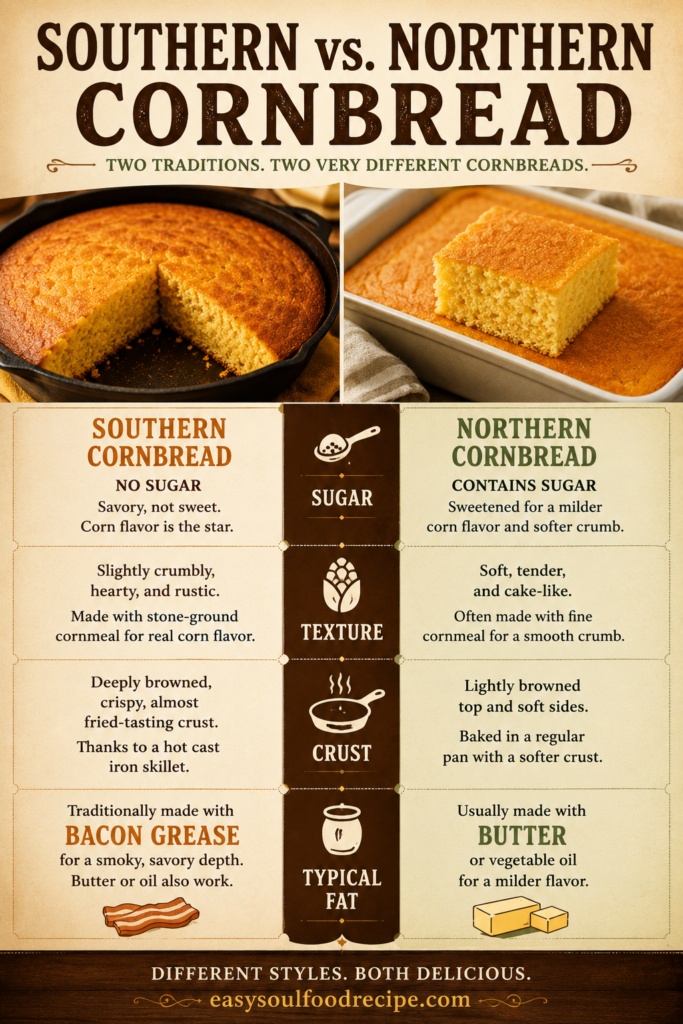
If someone hands you a slice of sweet cornbread and calls it Southern, that’s a different tradition — a perfectly good one, just not this one.
Cornmeal: Stone-Ground vs. Fine, Yellow vs. White
Your cornmeal choice matters more than almost anything else in this recipe. Stone-ground cornmeal keeps more of the corn’s germ and has a coarser, more textured grind — it gives you a heartier, more rustic crumb with real corn flavor. Fine-ground, more processed cornmeal gives a smoother, more uniform crumb but a milder flavor.
Yellow versus white is mostly regional preference and won’t change the texture — yellow cornmeal is more common and slightly sweeter-tasting even with no added sugar, while white cornmeal (more traditional in parts of the Deep South) has a cleaner, more neutral corn flavor. Either works here; use what you can find, but reach for stone-ground if you have the option.
Why the Cast Iron Skillet Isn’t Optional
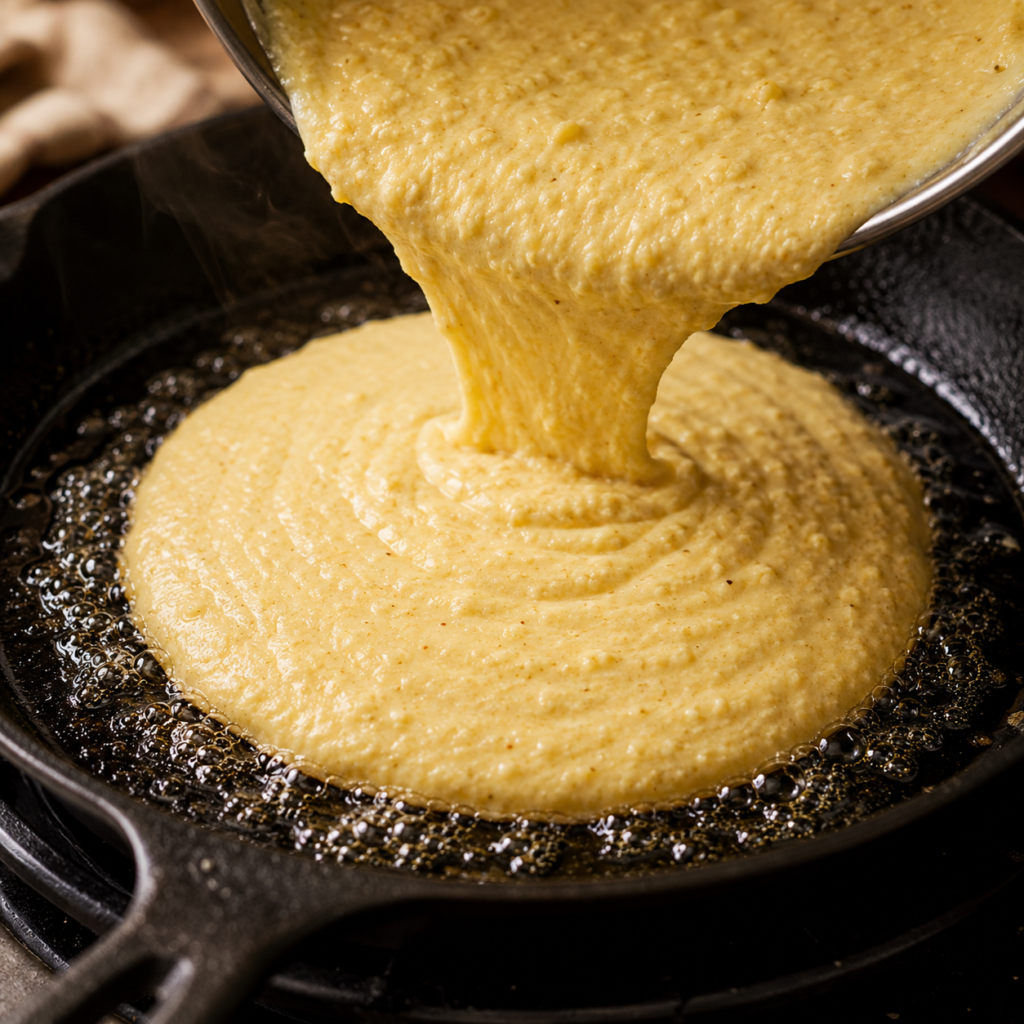
A cast iron skillet holds and distributes heat more evenly than a standard baking pan, and that difference is measurable in the crust you get. The technique: preheat your oven with the empty, oiled skillet inside for a few minutes before the batter goes in. When the batter hits that hot, fat-coated iron, it starts crisping and browning immediately instead of slowly warming up — that’s what gives you the deep, almost-fried bottom crust that defines a proper piece of soul food cornbread.
If you truly don’t own a cast iron skillet, a well-preheated metal baking pan is your next best option — see the FAQ below for more on that.
The Fat Debate: Bacon Grease vs. Butter vs. Oil
This is a real debate, and it’s worth taking a position on. Bacon grease, saved from cooking your morning bacon, gives cornbread a savory, smoky depth that butter or oil simply can’t replicate — it’s the traditional choice in a lot of soul food kitchens for exactly that reason. Butter brings richness and a slightly more delicate flavor. Neutral oil (vegetable or canola) is the most common substitute when you don’t have bacon grease on hand, and it still gets you that crisp crust since the fat-and-heat technique matters more than which fat you use.
Our take: bacon grease if you have it, butter if you don’t, oil if you’re out of both. All three will still crisp up properly in a hot skillet.
Buttermilk: Why It’s Here and What to Use Instead
Buttermilk’s acidity reacts with the baking soda in the batter to create a lighter, more tender crumb than you’d get with regular milk — it’s doing real chemical work, not just adding flavor. If you don’t have buttermilk, make a quick substitute: stir a tablespoon of lemon juice or white vinegar into a cup of regular milk and let it sit for five minutes before using.
Soul Food Cornbread Recipe
Yields: one 9-inch skillet (8–10 servings) | Prep time: 10 minutes | Cook time: 25 minutes
Ingredients:
- 2 tablespoons bacon grease, butter, or neutral oil (plus more for the skillet)
- 1½ cups stone-ground cornmeal (yellow or white)
- ½ cup all-purpose flour
- 1 tablespoon baking powder
- ½ teaspoon baking soda
- 1 teaspoon salt
- 2 large eggs, beaten
- 1½ cups buttermilk
Method:
- Place a 9-inch cast iron skillet in the oven and preheat the oven to 425°F (220°C) with the skillet inside.
- In a large bowl, whisk together the cornmeal, flour, baking powder, baking soda, and salt.
- In a separate bowl, whisk the eggs and buttermilk together.
- Pour the wet ingredients into the dry ingredients and stir just until combined — a few lumps are fine. Do not overmix, or the cornbread will turn out tough.
- Carefully remove the hot skillet from the oven. Add the fat of your choice and swirl to coat the bottom and sides completely; pour any excess into the batter and stir it in.
- Pour the batter into the hot skillet — it should sizzle audibly when it hits the pan. That sizzle is what builds the crust.
- Bake for 22–25 minutes, until the top is golden brown and a toothpick inserted in the center comes out clean.
- Let the cornbread rest in the skillet for 5 minutes before slicing.
Variations
- Skillet vs. pan: No cast iron? A well-preheated heavy metal baking pan will get you close, though the crust won’t be quite as crisp. Avoid glass or ceramic, which heat more slowly.
- Jalapeño: Fold in one finely diced jalapeño (seeds removed for less heat) for a spicy version.
- Cheese: Stir in ¾ cup shredded sharp cheddar for a richer, more savory loaf.
- Cracklin’: For a traditional touch, fold in ½ cup of pork cracklings for extra crunch and flavor.
How to Serve It
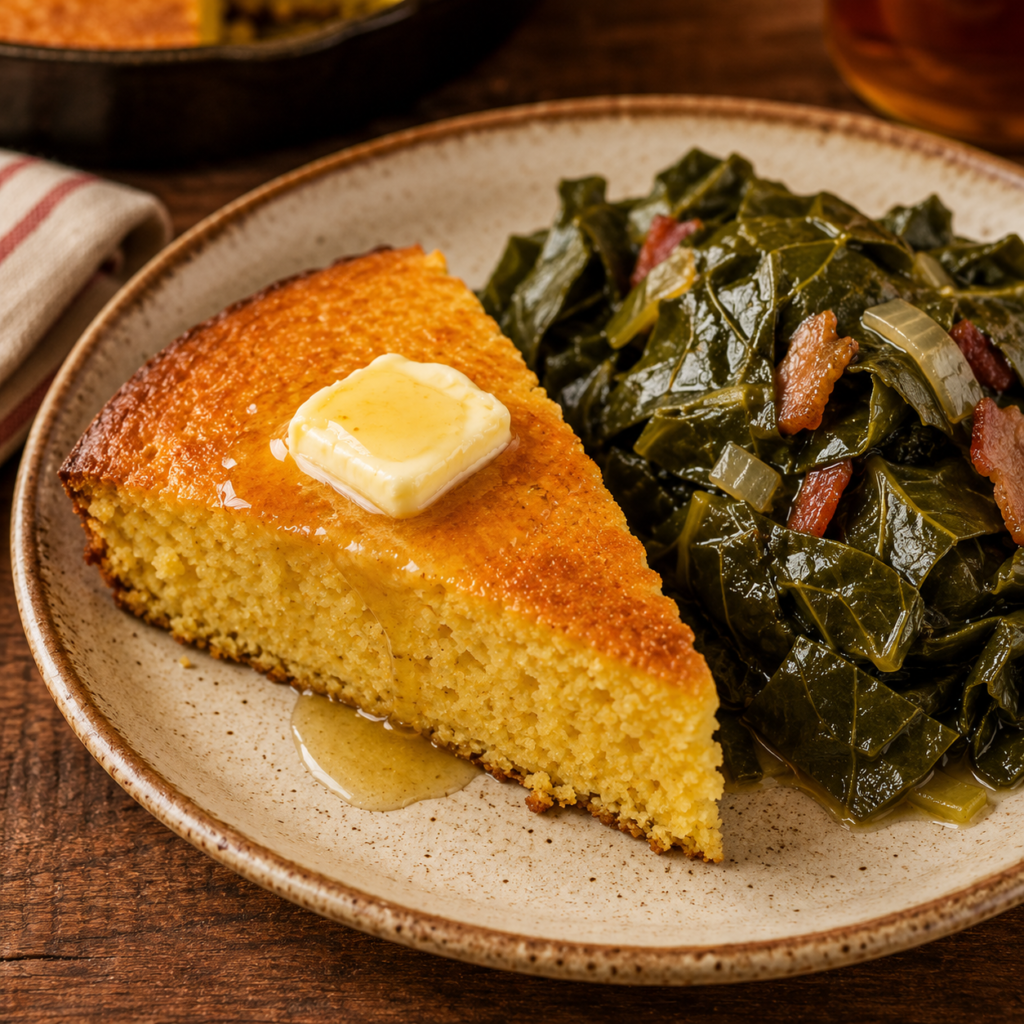
Soul food cornbread is a side, not a centerpiece — serve it warm alongside soul food ribs, a pot of greens, or any of these soul food side dish classics. It’s also traditional to crumble it into a glass of buttermilk or potlikker, or to use it as the base for cornbread dressing.
Storage and Reheating
Store leftover cornbread wrapped tightly at room temperature for up to two days, or in the fridge for up to a week. Cornbread dries out fast, so reheat individual pieces wrapped in foil in a 300°F oven for about 10 minutes rather than the microwave, which will make it tough. It also freezes well, wrapped tightly, for up to three months.
FAQ
Can I make it without cast iron? Yes — use the heaviest metal baking pan you own, and preheat it in the oven the same way. You’ll lose a little of the crust crispness, but the flavor and crumb will still be right.
Can I make it dairy-free? Swap the buttermilk for a plant-based milk mixed with a tablespoon of lemon juice or vinegar (same ratio as the dairy substitute above), and use oil instead of butter.
Why did my cornbread come out dry? The most common culprits are overbaking, or using a very lean cornmeal with too little fat. Pull it as soon as a toothpick comes out clean — a few extra minutes in the oven can make a real difference — and don’t skip swirling fat into the hot skillet before the batter goes in.
What’s the difference between Southern and Northern cornbread? Southern (and soul food) cornbread skips the sugar and leans savory, with a crisp, cast-iron crust. Northern cornbread is typically sweeter, often with more flour relative to cornmeal, giving a softer, more cake-like crumb.
Cornbread
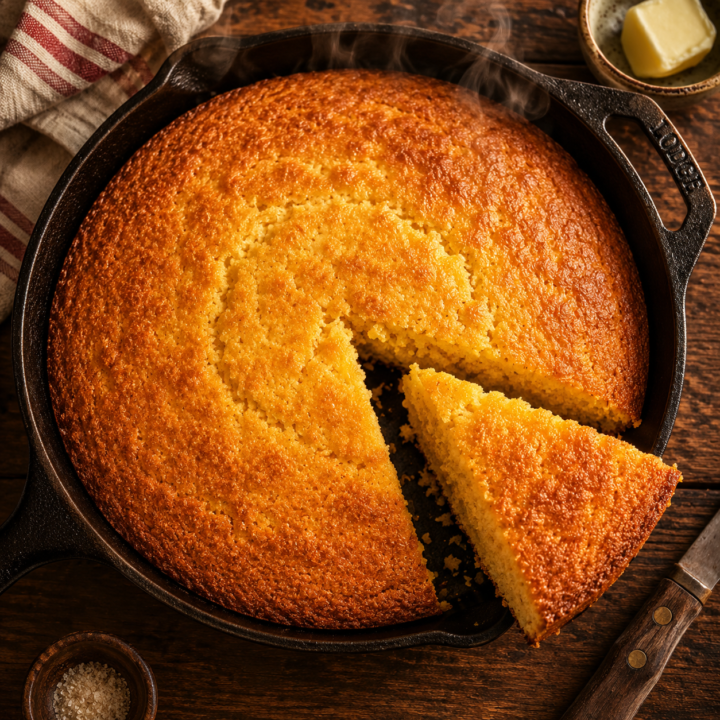
Learn how to make the classic southern cornbread and why the crust is so important
Ingredients
- 2 tablespoons bacon grease, butter, or neutral oil (plus more for the skillet)
- 1½ cups stone-ground cornmeal (yellow or white)
- ½ cup all-purpose flour
- 1 tablespoon baking powder
- ½ teaspoon baking soda
- 1 teaspoon salt
- 2 large eggs, beaten
- 1½ cups buttermilk
Instructions
- Place a 9-inch cast iron skillet in the oven and preheat the oven to 425°F (220°C) with the skillet inside.
- In a large bowl, whisk together the cornmeal, flour, baking powder, baking soda, and salt.
- In a separate bowl, whisk the eggs and buttermilk together.
- Pour the wet ingredients into the dry ingredients and stir just until combined — a few lumps are fine. Do not overmix, or the cornbread will turn out tough.
- Carefully remove the hot skillet from the oven. Add the fat of your choice and swirl to coat the bottom and sides completely; pour any excess into the batter and stir it in.
- Pour the batter into the hot skillet — it should sizzle audibly when it hits the pan. That sizzle is what builds the crust.
- Bake for 22–25 minutes, until the top is golden brown and a toothpick inserted in the center comes out clean.
- Let the cornbread rest in the skillet for 5 minutes before slicing.
Notes
Nutrition Information:
Yield: 10 Serving Size: 1Amount Per Serving: Calories: 234Total Fat: 5gSaturated Fat: 2gUnsaturated Fat: 3gCholesterol: 45mgSodium: 563mgCarbohydrates: 40gFiber: 3gSugar: 2gProtein: 7g