No Grits in the UK? Here’s the Substitute That Works
As an Amazon Associate I earn from qualifying purchases and sometimes recommend products from other sellers at no extra cost you. For more details see my disclosure policy and privacy policy.
If you have ever tried to find grits in a UK supermarket, you already know the answer. They are not there. Grits just are not a British staple, and most shops have never stocked them.
The good news is that a UK substitute gets you very close, once you know exactly which one to reach for and how to adjust it. Here is what grits actually are, why they are so hard to find here, and the swap that works for dishes like shrimp and grits or a simple breakfast bowl.
🌽 What Grits Actually Are
Grits are made from stone-ground corn, usually a variety called dent corn, and they have a coarse, slightly gritty texture that gives the dish its name. In the American South, they are cooked slowly in water, milk, or stock until they turn thick and creamy, then usually finished with butter and cheese.
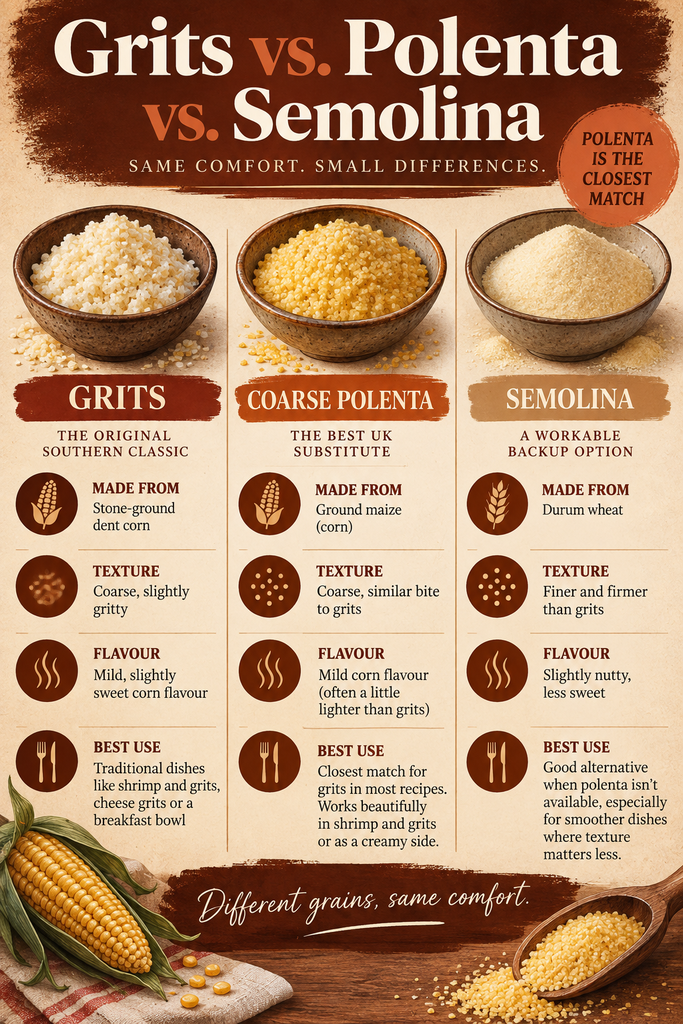
They are not the same thing as polenta, even though the two get compared constantly. Polenta is traditionally made from a different corn variety and ground to a range of textures from fine to coarse, while grits are specifically coarse and made from a type of corn bred for the American market. In practice, though, the two are close enough that polenta is the substitute worth reaching for.
Part of why grits never really crossed the Atlantic is simply that they never needed to. Corn-based porridges like polenta already existed in British and European cooking long before soul food recipes made their way over, so there was never quite the same gap in the market that, say, buttermilk or specific spice blends left behind. Shops stocked what people already knew how to buy.
🛒 Where to Actually Buy Your Substitute
Coarse polenta is not always easy to spot at first glance, since supermarkets often shelve it next to fine polenta or couscous rather than anywhere obviously corn-related. Check the label for “coarse” or “bramata” specifically, since the fine version will not give you the texture you are after.
- Large supermarkets: check the world foods aisle first, then the rice and grains aisle if you come up empty.
- Italian delis: almost always stock a proper coarse polenta, often at a better price than the supermarket version.
- Online specialists: retailers like Sous Chef stock both polenta and, if you want to try the real thing occasionally, imported grits too.
The Best Substitute: Coarse Polenta
Coarse polenta, sometimes labelled “polenta bramata,” is the closest match you will find on a UK shelf. It has a similar bite to grits and behaves the same way once it hits a pot of simmering liquid, swelling up and turning creamy as it cooks.
Look for it in the world foods aisle of larger supermarkets, in Italian delis, or from online specialist retailers like Sous Chef, which stock both polenta and grits directly. Avoid anything labelled “quick” or “instant” polenta if you can, since that is milled much finer and will not give you the same texture.
Use polenta in place of grits at a 1:1 ratio by volume, and cook it in roughly four parts liquid to one part polenta, which is close to the ratio most grits recipes use. Simmer gently, stirring often, until it thickens, which usually takes 20 to 30 minutes for coarse polenta.
🌾 Second Choice: Semolina
If you cannot get hold of coarse polenta, semolina is a workable backup, particularly for smoother dishes where grits’ texture matters less.
Semolina is made from durum wheat rather than corn, so the flavour is slightly different, a bit nuttier and less sweet than corn-based grits. The texture is also finer and firmer once cooked, closer to a thick porridge than the slightly grainy bite of real grits.
Use the same 1:1 swap by volume, but check it a little earlier, since semolina tends to thicken faster than polenta does.
🍤 Using Your Substitute in Soul Food Dishes
For shrimp and grits, coarse polenta holds up well. Cook it slowly with butter and a generous handful of cheese stirred in at the end, exactly as you would with real grits, and it will carry the dish just as well underneath the shrimp and sauce.
For cheese grits as a side, either substitute works, though polenta is the closer match for texture. Stir the cheese in while the polenta is still hot enough to melt it fully, and taste for salt before serving, since polenta can need a touch more seasoning than grits do.
For a breakfast bowl, keep it simple. Cook your polenta or semolina in milk rather than water for a creamier result, and add a knob of butter and a pinch of salt right at the end.
⚠️ Where the Substitute Falls Short
Being honest about this matters more than pretending it is a perfect match. Polenta and semolina both get you close, but neither one is real grits.
The corn flavour is milder in polenta than it is in true grits, and the texture, while similar, is not identical once you know what to look for side by side. If you want the real thing rather than a substitute, a few UK-based specialist retailers and online importers do stock genuine grits, usually at a premium price and often only in larger bag sizes than you would normally buy for a single dish.
For everyday cooking, though, coarse polenta is a genuinely good stand-in, not just a compromise you settle for because there is nothing else.
🥄 Getting the Texture Right
Lumps are the most common problem, and they almost always come from adding the polenta too quickly. Pour it into the liquid in a slow, steady stream while whisking constantly, rather than tipping it all in at once and stirring afterwards.
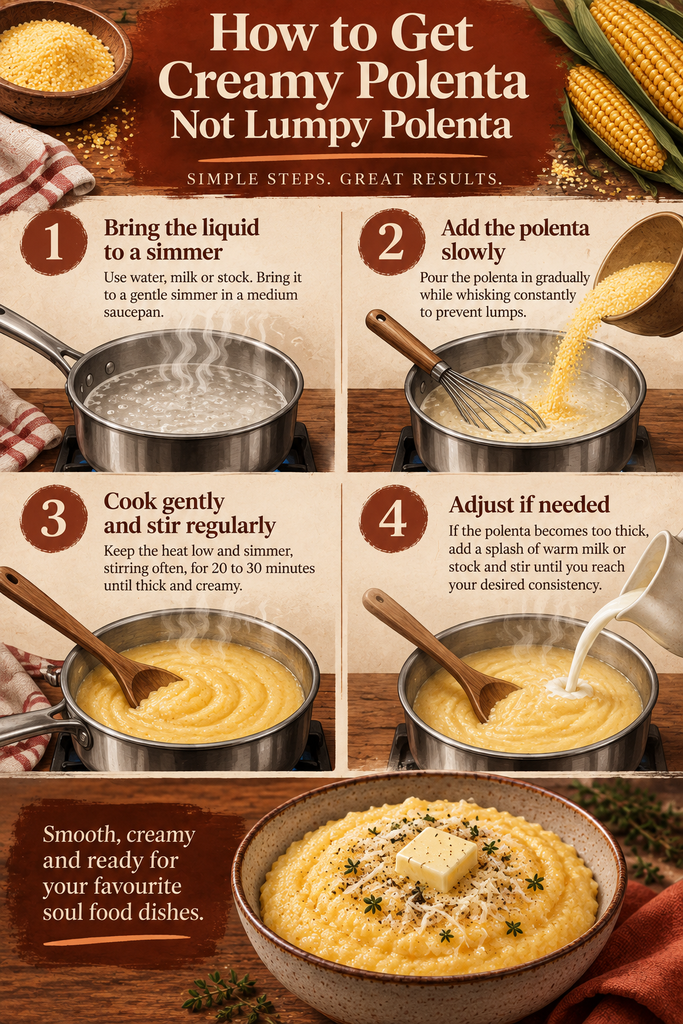
Keep the heat low once it starts to thicken, and stir every couple of minutes rather than leaving it completely unattended. Coarse polenta can catch and stick to the bottom of the pan more readily than you would expect, especially in the last five minutes of cooking as it thickens fully.
If it turns out thicker than you wanted, a splash of warm milk or stock stirred in at the end loosens it back up without affecting the flavour. If it is too thin, a few more minutes on low heat, stirring often, will fix it far more reliably than turning up the temperature.
❓ Grits Substitute FAQs
Can I use fine polenta instead of coarse? You can, but you will lose the texture that makes this substitute work in the first place. Fine polenta cooks up smooth rather than slightly grainy, which is closer to a general corn porridge than to grits.
Will coarse polenta taste exactly like grits? No, and it is worth going in with the right expectations. The corn flavour is a little milder, though once butter, cheese, and seasoning are involved, most people find the difference far less noticeable than they expected.
Can I make this in a slow cooker? Yes, though stovetop is more reliable while you are still getting used to the timing. If you do use a slow cooker, check it on low after about an hour and a half rather than assuming it needs the same time as a stovetop batch.