Southern Black-Eyed Peas Recipe (Soul Food Style)
As an Amazon Associate I earn from qualifying purchases and sometimes recommend products from other sellers at no extra cost you. For more details see my disclosure policy and privacy policy.
Ask anyone from the American South what they’re eating on the 1st of January and there’s a decent chance the answer involves a pot of black-eyed peas. It sounds humble on paper, a bowl of beans in savoury broth, but it carries a lot of tradition and family history in every spoonful.
I’d never so much as seen a black-eyed pea before cooking my way through soul food classics for this blog. They’re not something you’ll find next to the baked beans in a UK supermarket, so this one took some hunting down. Here’s what they are, why Southern cooks treasure them, and how to make a proper pot at home in Britain.
What Are Black-Eyed Peas?
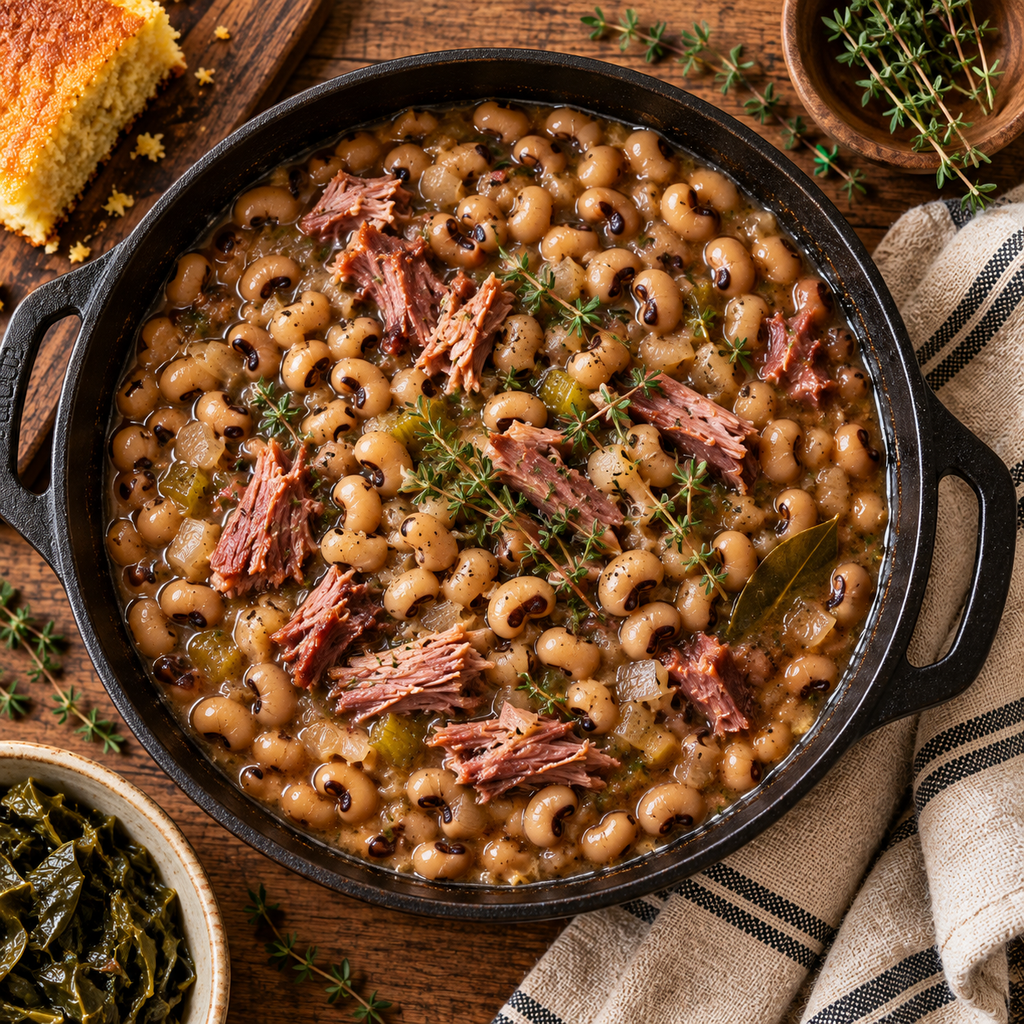
Black-eyed peas are small cream-coloured beans with a distinctive black or dark brown “eye” on one side. Despite the name, they’re technically a variety of cowpea rather than a true pea, and they turn up in cuisines from West Africa to India as well as the American South.
They arrived in the Southern United States through the transatlantic slave trade, brought over from West Africa along with the knowledge to cook them well. That history is a core part of why they sit so firmly inside soul food cooking rather than being just another bean.
Cooked low and slow with pork, onion, and a good stock, they turn creamy and tender with a mild, earthy flavour. They’re closely tied to another Southern classic, Hoppin’ John, which pairs the peas with rice and pork.
The New Year’s Day Tradition
If you spend any time reading about black-eyed peas, you’ll run into the New Year’s Day “luck and money” story quickly. Southern tradition holds that eating them on the 1st of January brings good fortune for the year ahead, with the peas said to represent coins and any greens served alongside (usually collard greens) representing paper money.
It’s worth being clear that this is a cultural belief and a lovely piece of folklore, not a claim I’m making about anything actually happening if you skip it. It’s thought to date back to at least the 1800s, tracing to Civil War-era Charleston and older West African cowpea customs. Some families even tuck a shiny coin into the pot, so whoever finds it gets extra luck.
Whether or not you believe a bean can change your year, it’s a genuinely warming, comforting dish worth making any time, not just on the 1st.
Sourcing Black-Eyed Peas in the UK
This is the bit that trips up most UK cooks, myself included, because black-eyed peas aren’t a shelf staple here the way kidney beans are. They do exist in Britain, you just need to know where to look.
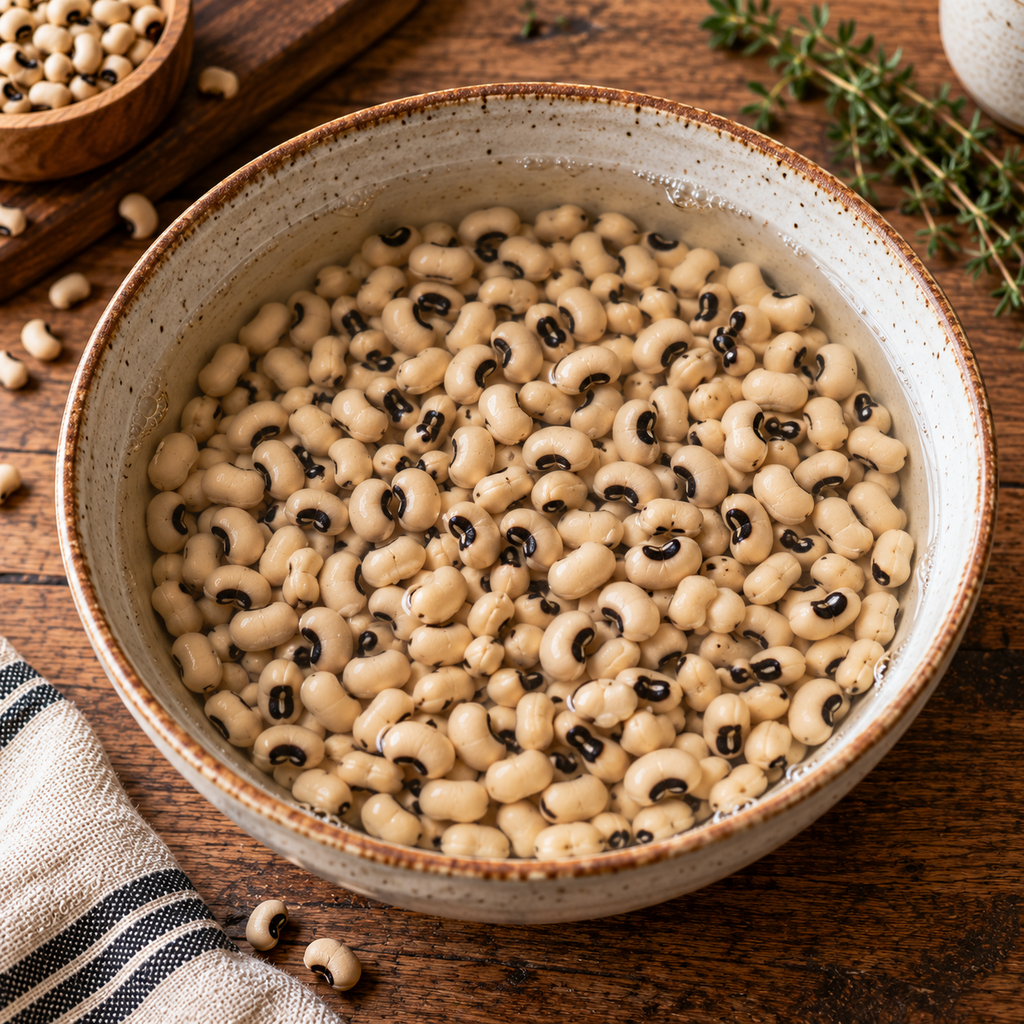
Dried: Check the world food aisle of larger supermarkets, or an international or Caribbean grocer, since they’re common in West African, Caribbean and South Asian cooking. Brands like Jalpur and Tropical Sun turn up reliably online if your local shop comes up empty.
Tinned: The easier weeknight route. Tesco stocks East End Black Eye Beans and Sainsbury’s carries its own tinned black eye beans, both shelved with the tinned pulses rather than the baked beans. KTC is another widely stocked brand worth checking for.
For a broader rundown of where to track down soul food staples in Britain, I’ve written a full guide on where to buy soul food ingredients in the UK, worth a look before your shop.
The Classic Seasoning Base
Soul food black-eyed peas lean on a simple but non-negotiable flavour base. Get this right and the rest of the recipe looks after itself.
- Smoked ham hock or bacon: a hock gives the deepest, smokiest flavour and falls apart into the pot, but bacon lardons work well if a hock is hard to find.
- Onion and garlic: finely chopped and softened first, they build the savoury backbone.
- Stock: chicken or vegetable stock forms the well-seasoned braising liquid.
- Bay leaf, thyme, and black pepper: classic Southern aromatics that round everything out.
A pinch of cayenne or a dash of hot sauce at the table is traditional too, so guests can heat things up to their own taste.
How to Make Southern Black-Eyed Peas
This method uses dried peas soaked overnight, with tinned and slow cooker notes below if you’re short on time.
- Soak 500g dried black-eyed peas in plenty of cold water overnight, then drain and rinse.
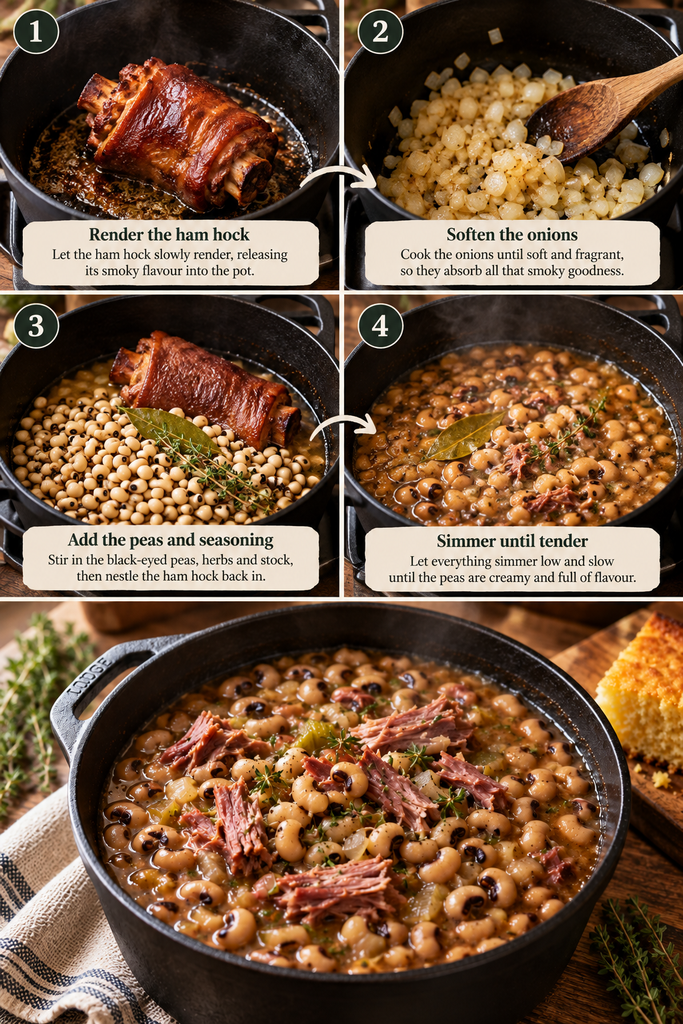
- In a large pot or cast iron skillet with a lid, cook the chopped bacon or ham hock over a medium heat until the fat starts to render, about 5 minutes.
- Add one diced onion and cook until soft and translucent, then stir in 3 cloves of chopped garlic for a further minute.
- Add the soaked, drained peas, a bay leaf, a few sprigs of thyme, and enough stock to cover everything by about 3cm.
- Bring to a gentle simmer, cover, and cook for 60 to 90 minutes, topping up with a little extra stock or water if the pot looks dry.
- Once the peas are tender and the ham hock is falling apart, remove the hock, shred the meat off the bone, and stir it back through the peas.
- Season to taste with black pepper and a little salt (go easy on salt if your ham hock is already salty), then serve hot.
Slow Cooker Note
If you’d rather leave this to simmer while you get on with your day, brown the bacon or ham hock, onion and garlic in a pan first, then transfer to the slow cooker with the soaked peas and stock. Cook on low for 6 to 7 hours, or high for 3 to 4, until tender.
Using tinned black-eyed peas instead of dried? Skip the soaking and simmering time, and just add the drained, rinsed tins in the last 20 to 30 minutes so they warm through without turning mushy.
Tips for the Best Black-Eyed Peas
A few things I’ve picked up from trial and error make a real difference. Don’t add salt too early, since a smoked ham hock already brings plenty of its own.
Keep the simmer gentle rather than a rolling boil, which can split the skins. A splash of cider vinegar or a spoonful of Cajun seasoning near the end brightens things up if the pot tastes flat.
What to Serve with Black-Eyed Peas
Black-eyed peas are a soul food side in their own right, but they’re happiest sharing a plate with a few classics. A wedge of warm cornbread for mopping up the broth is close to essential.
A pile of collard greens alongside brings the traditional “coins and paper money” pairing to the table. Plain rice turns the peas into a fuller meal, echoing Hoppin’ John, and for a full spread they sit well next to other classic soul food sides like mac and cheese or candied yams.
Storage and Reheating
Cooked black-eyed peas keep well in an airtight container in the fridge for up to 4 days, and the flavour genuinely improves overnight as the seasoning settles in.
Reheat gently on the hob with a splash of water or stock to loosen the sauce, stirring so nothing catches on the bottom. They also freeze well for up to 3 months, so it’s worth making a double batch and freezing portions for an easy midweek dinner later.
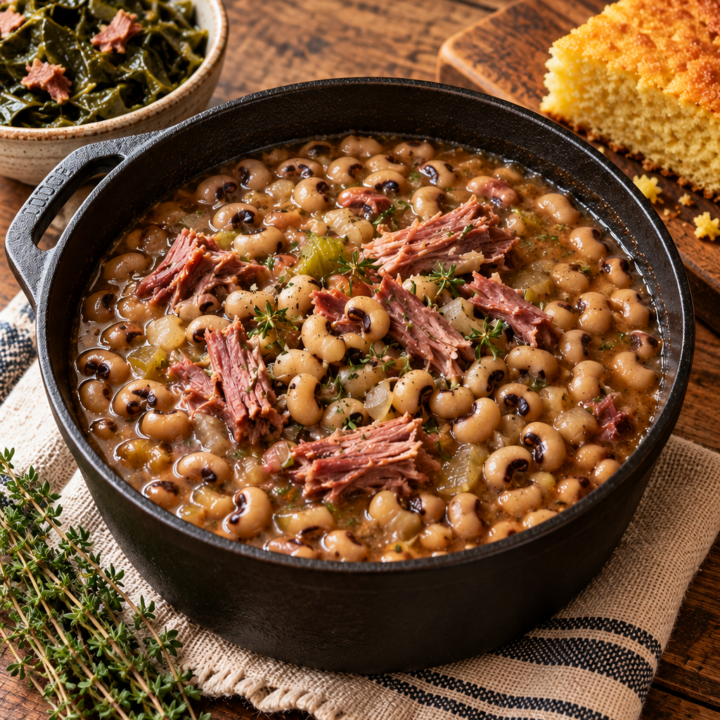
Black Eyed Peas
Southern black-eyed peas made simple for UK kitchens. Learn what they are, where to buy them here, and how to cook the classic soul food recipe from scratch.
Ingredients
- 500g dried black-eyed peas, soaked overnight (or 3 x 400g tins, drained and rinsed)
- 1 smoked ham hock, or 150g smoked bacon lardons
- 1 onion, finely chopped
- 3 garlic cloves, chopped
- 1 to 1.2 litres chicken or vegetable stock
- 1 bay leaf
- A few sprigs of fresh thyme
- Black pepper, to taste
- Salt, to taste (add cautiously)
- Optional: hot sauce or cayenne pepper, to serve
Instructions
- Drain and rinse the soaked black-eyed peas.
- Render the bacon or ham hock in a large pot over medium heat, about 5 minutes.
- Add the onion and cook until soft, then stir in the garlic for 1 minute.
- Add the peas, bay leaf, thyme, and stock to cover by 3cm.
- Simmer gently, covered, for 60 to 90 minutes until tender.
- Shred any ham hock meat back into the pot and discard the bone.
- Season to taste and serve hot with cornbread, greens, or rice.
Notes
- Don't add salt too early, since a smoked ham hock already brings plenty of its own.
- Keep the simmer gentle rather than a rolling boil, which can split the skins.
- A splash of cider vinegar or a spoonful of Cajun seasoning near the end brightens things up if the pot tastes flat.
Nutrition Information:
Yield: 6 Serving Size: 1Amount Per Serving: Calories: 91Total Fat: 0gSaturated Fat: 0gUnsaturated Fat: 0gCholesterol: 2mgSodium: 197mgCarbohydrates: 16gFiber: 5gSugar: 6gProtein: 7g