Soul Food Side Dishes: 10 Classics That Make the Meal
As an Amazon Associate I earn from qualifying purchases and sometimes recommend products from other sellers at no extra cost you. For more details see my disclosure policy and privacy policy.
If you’ve ever sat down to a proper soul food spread, you’ll know that the sides aren’t really sides at all — they’re half the point. When I first started cooking soul food from my British kitchen, I was focused almost entirely on the main dishes: ribs, fried chicken, gumbo. It took a while before I understood that the sides are where so much of the heart of this cuisine actually lives.
Southern and soul food sides are the dishes that show up at every family gathering, every Sunday dinner, every holiday table. They’re the recipes people are most protective of, most likely to have a strong opinion about, and most likely to have learned from watching rather than reading. This post covers 10 of the most beloved soul food side dishes — what they are, why they matter, and how to approach them if you’re cooking them for the first time.
Why Soul Food Sides Are a Category of Their Own
Soul food has its roots in the cooking of African Americans in the American South, developed over centuries from a combination of West African culinary traditions, Native American ingredients, and the necessity of making extraordinary food from limited resources. The sides reflect that history in every bite — slow-cooked greens, slow-simmered beans, cornbread made in a cast iron skillet. These aren’t dishes that were designed to be quick or convenient. They were designed to be deeply satisfying.
What strikes me most about these dishes, having come to them as an outsider, is how much technique and knowledge is quietly packed into things that look simple. Collard greens look like a pot of cooked greens. They are, in fact, a study in low-and-slow cooking, seasoning, and understanding how bitterness transforms into something entirely different over a long simmer. That’s a theme that runs through almost every dish on this list.
The Difference Between a Side and a Supporting Character
In a lot of cuisines, sides are filler — something to round out the plate. In soul food, the sides are part of the conversation. A plate of soul food ribs without mac and cheese alongside it feels incomplete in the same way a sentence without a verb does. The sides aren’t decorative; they’re structural.
That’s also why getting them right matters. A dry cornbread, a mac and cheese that’s curdled, collard greens that haven’t been cooked long enough — these aren’t minor disappointments. They’re the things people notice.
The 10 Soul Food Side Dishes Worth Knowing
1. Collard Greens
Collard greens are arguably the most iconic soul food side dish, and the one I’d recommend any newcomer to this cuisine get to grips with early. They’re leafy, slightly bitter greens that are slowly cooked — traditionally with smoked meat, often ham hocks or bacon — until they become tender and deeply flavoured. The cooking liquid left in the pot, called pot likker, is considered a delicacy in its own right and is often used for dipping cornbread.
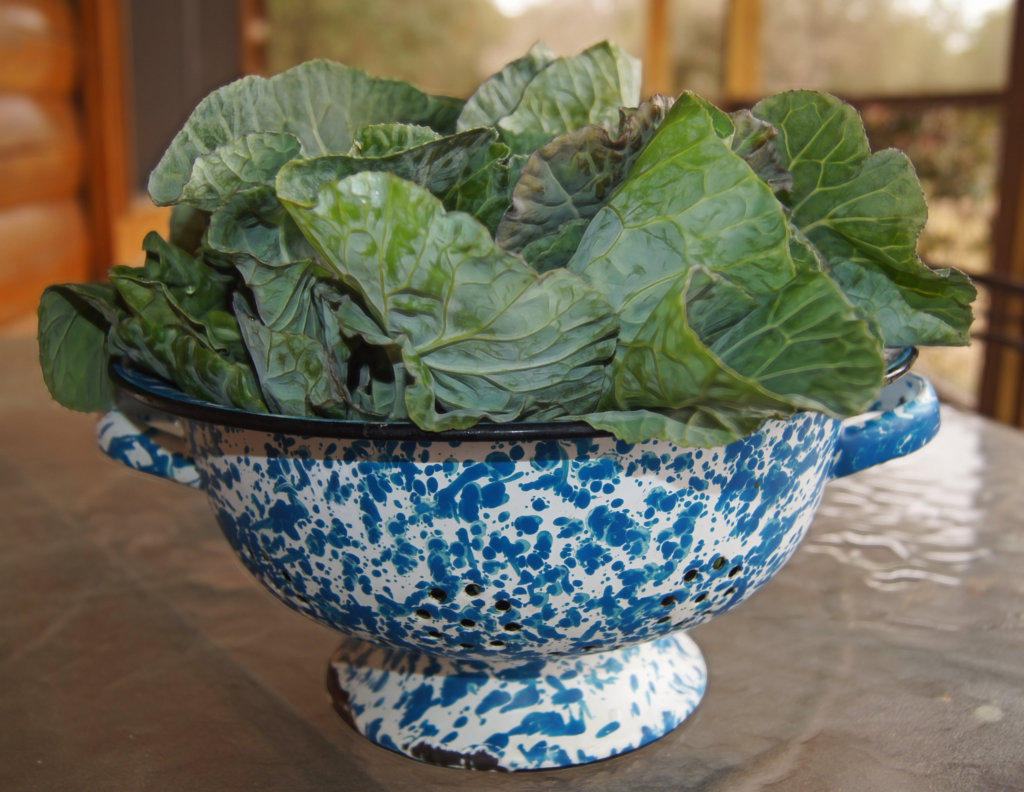
One thing I struggled with early on was finding collard greens in the UK, where they’re not a supermarket staple. Cavolo nero (black kale) is the closest widely available substitute, and it works well. For everything you need to know about this vegetable, including what it is and how to prepare it, the guide to collard greens on this site covers it in detail.
2. Macaroni and Cheese
Soul food mac and cheese is not the same thing as the mac and cheese you might have grown up with in the UK, and it’s worth understanding why. This is a baked macaroni and cheese — layered, custardy, made with eggs as well as cheese, and cooked in the oven until the top is golden and slightly firm. It’s closer to a cheese bake than a pasta dish, and it is absolutely magnificent.
The cheese of choice in Southern cooking is typically sharp cheddar, though many recipes layer in additional cheeses for complexity. The egg-and-milk custard base is what gives baked soul food mac and cheese its distinctive texture — firm enough to slice, creamy enough to be unmistakably comfort food.
3. Cornbread
Cornbread is one of those dishes that sounds simple and contains multitudes. At its most basic, it’s a quick bread made from cornmeal, and it’s been a staple of Southern cooking for centuries. In practice, the variations are enormous — sweet versus savoury, cast iron skillet versus baking tin, Northern style versus Southern style. The debate about whether cornbread should contain sugar is one that Southerners have genuinely strong feelings about (traditional Southern cornbread typically doesn’t).
For soul food purposes, cornbread is the thing you use to mop up pot likker from the collard greens, to balance the richness of mac and cheese, and to soak up the juices from a slow-cooked main. It’s functional as much as it is delicious, and learning to make a good skillet cornbread is one of the most useful things you can do if you’re exploring this cuisine.
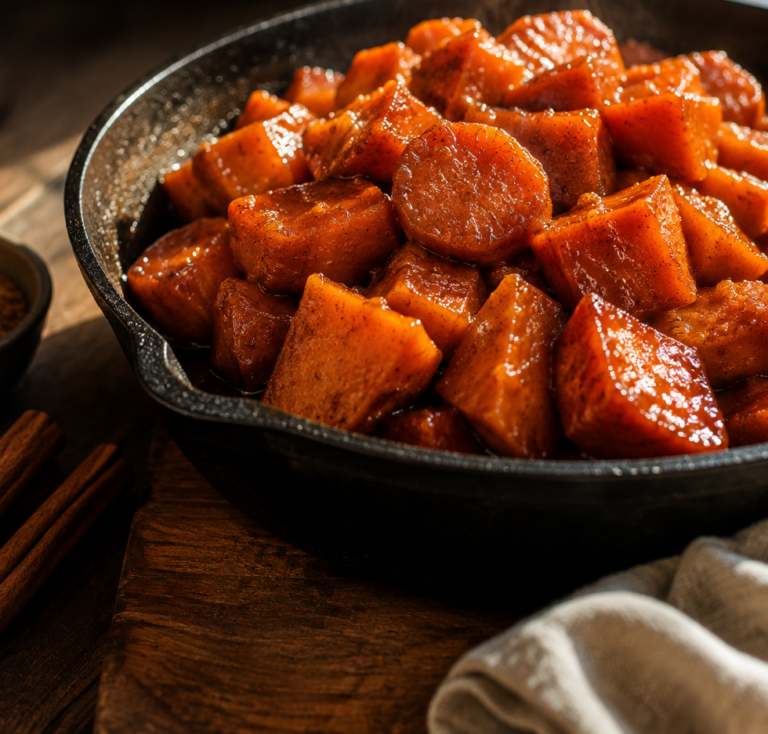
4. Candied Yams
Don’t let the name fool you — in American soul food, “yams” almost always means sweet potatoes, not the starchy tropical root vegetable that goes by the same name elsewhere. Candied yams are sweet potatoes cooked in a spiced syrup of butter, brown sugar, cinnamon, and nutmeg until they’re soft and glossy and deeply caramelised. They sit somewhere between a side dish and a dessert, and they’re extraordinary alongside savoury, smoky main dishes.
If you’re in the UK and want to explore this direction, the creamy mashed sweet potatoes with fresh thyme on this site is a gentler introduction to cooking sweet potatoes as a side dish, and an excellent starting point before you move on to the full candied version.
5. Black-Eyed Peas
Black-eyed peas have a cultural significance in soul food that goes well beyond their flavour. They’re traditionally eaten on New Year’s Day across the American South, where they’re associated with good luck and prosperity — a tradition with roots in West African culture and Sephardic Jewish tradition that became embedded in Southern African American cooking. They’re typically cooked with smoked meat and aromatics until soft and rich, often served with rice in a dish called Hoppin’ John.
Outside of New Year’s Day, black-eyed peas appear regularly as a side dish at soul food spreads. They’re earthy, slightly nutty, and do wonderful things when slow-cooked with a ham hock and some onion. They’re not as easy to find fresh in the UK as they are in the US, but dried black-eyed peas are available in most supermarkets and work perfectly.
6. Fried Okra
Okra is a vegetable that divides people, usually because of its mucilaginous texture when cooked in liquid. Fried okra sidesteps this entirely — sliced okra is coated in seasoned cornmeal and fried until crisp on the outside and tender inside, and the result is one of the best things you can put on a plate. It’s crunchy, slightly savoury, and disappears fast.
Finding okra in the UK takes a bit more effort than it might in the American South, but it’s generally available in Asian supermarkets and Caribbean grocers. It’s well worth tracking down. Fried okra is a natural companion to most soul food mains, and once you’ve made it you’ll understand why it’s considered a non-negotiable at a proper Southern spread.
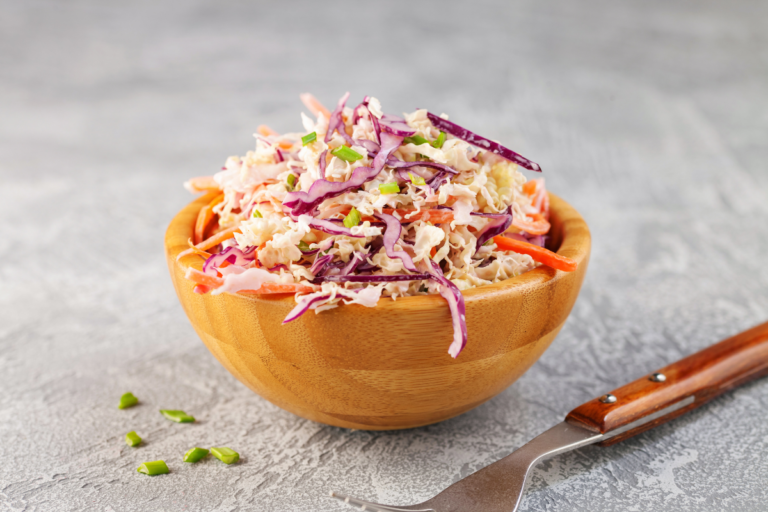
7. Coleslaw
Coleslaw is one of those dishes that exists in virtually every food culture but means something specific in the context of soul food — creamy, slightly sweet, cooling, and designed to sit alongside rich, smoky, or spiced mains. It’s the contrast dish: the crunch and freshness next to the slow-cooked fall-apart meat.
There’s more to making a genuinely good coleslaw than most people assume. The ratio of dressing to cabbage, how long you let it sit before serving, the balance of sweet and sharp — it all matters. If you want to go deep on this, the homemade coleslaw guide covers the full history and technique in detail.
8. Potato Salad
Southern potato salad is a serious business. It’s a creamy, mustard-forward dish — typically made with yellow mustard, mayonnaise, hard-boiled eggs, and sweet pickle relish — and it has a very particular flavour and texture that’s distinct from, say, a French potato salad or a German one. It’s sweet and tangy and substantial, and it belongs at any cookout or Sunday dinner spread.
The key to a good Southern potato salad is in the details: the potatoes shouldn’t be overcooked to mush, but they should be soft enough to absorb the dressing. The eggs need to be properly hard-boiled (grey rings around the yolk are the enemy). And the dressing needs to be made while the potatoes are still warm so it can soak in properly.
9. Baked Beans
Soul food baked beans are a long way from the tinned variety — these are slow-cooked beans in a thick, smoky, slightly sweet sauce made with bacon or smoked sausage, brown sugar, and a depth of flavour that only comes from time. They’re the kind of side dish that makes people ask for the recipe. The slow cooker is genuinely well-suited to this, because the beans benefit from hours of low, gentle heat.
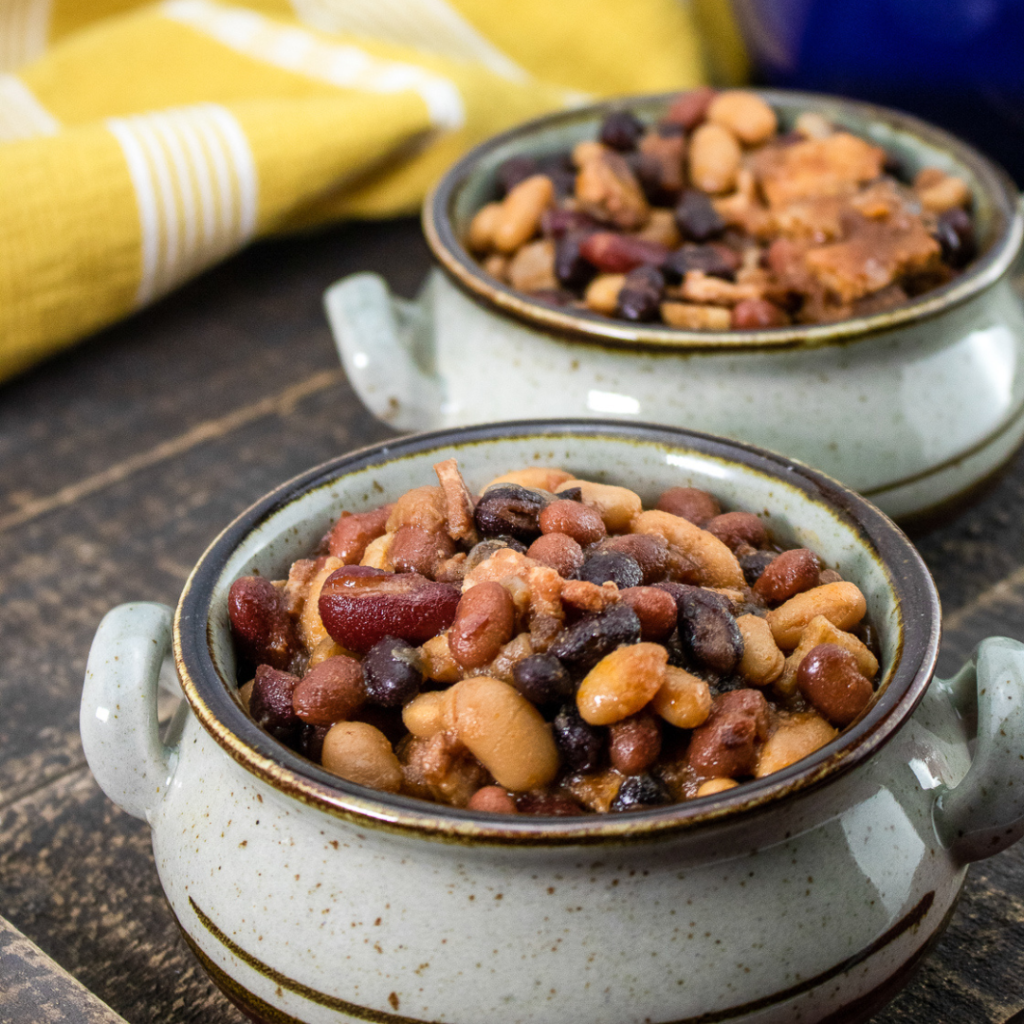
The slow cooker baked beans with bacon on this site is exactly the kind of recipe that rewards patience — it’s simple to put together and the result tastes like you’ve been cooking all day. Because you have.
10. Hush Puppies
Hush puppies are small, deep-fried cornmeal fritters — crispy on the outside, soft and slightly fluffy inside, seasoned with onion and sometimes jalapeño. The name has a few claimed origins (the most common is that they were used to quieten hungry dogs at fish fries by throwing them scraps), but whatever their etymology, they’re one of the most satisfying things you can make with cornmeal.
They’re most commonly served alongside fried fish or seafood — they’re a natural companion to seafood gumbo or any fried seafood dish — but they work well alongside almost any soul food main. Like cornbread, they’re a vehicle for soaking up flavour, and like fried okra, they’re the kind of thing that disappears from the table before you’ve had a chance to go back for seconds.
How to Build a Soul Food Side Dish Spread
One of the things that took me a while to understand about soul food is that the sides are often designed to work together as a group, not just alongside a main dish. A proper Sunday soul food dinner might have four or five sides on the table at once — and they’re not random. They’re balanced. Something creamy (mac and cheese), something green and bitter (collard greens), something starchy and comforting (cornbread or baked beans), something bright or crunchy (coleslaw or fried okra).
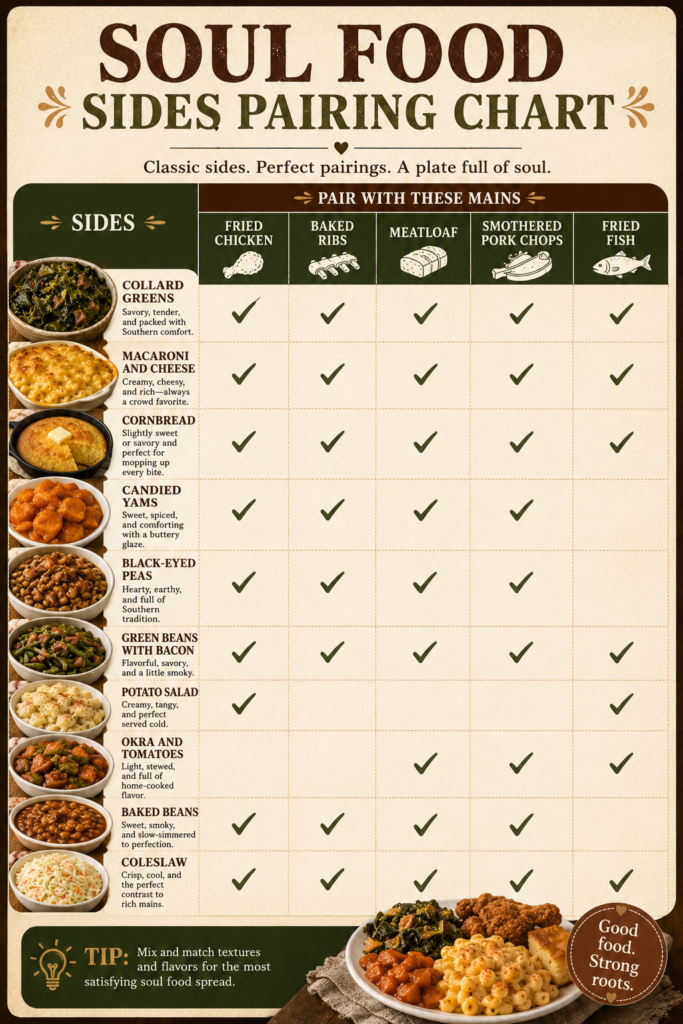
Pairing Sides with Mains
The pairings that come up again and again in soul food cooking are worth knowing:
- Ribs or pulled pork — coleslaw, baked beans, cornbread, mac and cheese
- Fried chicken — collard greens, mac and cheese, cornbread, potato salad
- Gumbo — cornbread, potato salad, fried okra
- Roast or smoked meat — candied yams, black-eyed peas, collard greens
These aren’t rules. They’re patterns that developed because they work — the richness and smoke of the main balanced against the earthiness of the greens, the sweetness of the yams, the crunch of the fried okra. If you’re making the soul food ribs from this site and want to build a full spread around them, start with the mac and cheese, the coleslaw, and the baked beans — that’s a combination that covers all the bases.
Scaling for a Group
Most soul food sides are well-suited to cooking for a crowd, which is part of why they’ve always featured so prominently at gatherings. Baked beans, collard greens, and candied yams all benefit from larger quantities and longer cooking times — they’re not dishes that suffer from scaling up. Mac and cheese can be made in a large baking dish and sliced into portions. Coleslaw and potato salad can both be made ahead and will actually improve with a few hours in the fridge.
If you’re new to soul food cooking and want to try building a proper spread, pick two or three sides to start with rather than attempting all ten at once. The collard greens and the baked beans are probably the most forgiving for beginners — both are slow-cooked, both have lots of flavour to carry them even if the seasoning isn’t quite right, and both are deeply satisfying.
A Few Notes for UK Cooks
Most soul food sides are accessible from a British kitchen, but a few ingredients need a bit of hunting. Cornmeal — essential for cornbread, hush puppies, and fried okra — is increasingly available in large supermarkets and health food shops, though you’ll sometimes find it labelled as polenta or maize meal. These are the same thing and will work fine.
Sweet potatoes are now a staple in UK supermarkets. Black-eyed peas are available dried in most supermarkets and in tins in some. Okra is the trickiest to find in mainstream shops but is widely available in Caribbean and South Asian grocery stores — if you live near a city, you’ll find it.
The ingredients that are genuinely hard to source — things like andouille sausage, certain types of smoked sausage, or specific varieties of hot sauce — can often be substituted or ordered online. But for the sides on this list, you’ll find that most of what you need is closer to hand than you might think.
Getting Started
If I had to recommend three dishes from this list to someone cooking soul food sides for the first time, they’d be collard greens, mac and cheese, and cornbread. These three together form the core of the soul food side tradition — they appear at virtually every significant meal, they complement almost any main, and mastering them gives you a foundation to build the rest of the list on.
The holy trinity of soul food flavour — onion, celery, and green bell pepper — appears in the background of several of these dishes, quietly doing the work of building flavour. Understanding that combination and how it behaves is one of the most useful things you can learn as you work your way through this cuisine.
Start with one dish at a time, cook it more than once, and pay attention to what the recipe is actually trying to do. Soul food is a cuisine that rewards patience and repetition — and the sides are the best possible place to begin.
Continue Your Journey
- What Are Collard Greens? Everything You Need to Know — A full guide to this soul food staple, including how to prepare them and what to expect from the cooking process.
- The Holy Trinity in Cooking: The Secret Behind So Much Soul Food — Understanding the flavour foundation that underpins so many of these dishes.
- Soul Food Ribs: A Recipe That’ll Have You Coming Back for More — The main dish to build your sides spread around.
- Slow Cooker Baked Beans with Bacon — One of the most approachable soul food sides for beginners.
- Creamy Mashed Sweet Potatoes with Fresh Thyme — A gentler entry point to cooking sweet potatoes as a soul food side.
What soul food side dish are you most curious to try first? Drop a comment below — I’d love to know where you’re starting.
Want more soul food recipes and guides straight to your inbox? Sign up for the Easy Soul Food Recipes newsletter and I’ll let you know when new posts go up.