Traditional Southern Fried Chicken: Method, UK Substitutions & Tips
As an Amazon Associate I earn from qualifying purchases and sometimes recommend products from other sellers at no extra cost you. For more details see my disclosure policy and privacy policy.
Most fried chicken recipes online skip the “why” entirely. They hand you a list of steps and expect you to trust it. This guide walks through the traditional method properly: the buttermilk brine, the seasoned dredge, the frying technique, and why each part matters, then bridges the gap for UK readers who can’t always find the exact ingredients or equipment US recipes assume you have.
Traditional Southern fried chicken is a technique worth understanding, not just following blindly, and once you know why each step is there, it stops being intimidating and starts being something you can genuinely nail at home.
🐔 The Buttermilk Brine (And Why It Actually Matters)
Traditional Southern fried chicken starts with a buttermilk soak, usually anywhere from a few hours to overnight. The lactic acid in buttermilk gently breaks down tough proteins in the chicken, which is what gives properly brined fried chicken its tenderness. It’s not just a flavour step, it’s a texture step.
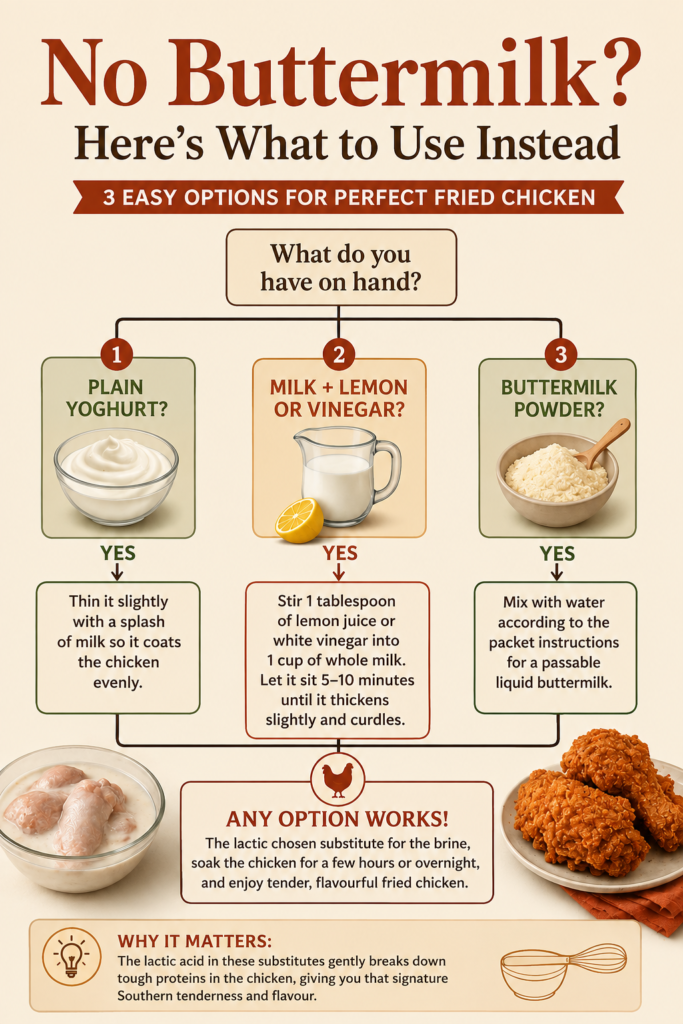
If you’re in the UK and struggling to find buttermilk, you’re not alone. It’s far less of a supermarket staple here than it is in the US. A few reliable swaps:
- Soured milk: stir a tablespoon of lemon juice or white vinegar into a cup of whole milk and let it sit for five to ten minutes until it thickens slightly and curdles.
- Plain yoghurt, thinned: yoghurt has a similar tang and thickness to buttermilk. Thin it slightly with a splash of milk so it coats the chicken evenly.
- Buttermilk powder: some UK supermarkets and baking aisles stock it. Mix with water per the packet instructions for a passable liquid buttermilk.
For UK-specific sourcing beyond buttermilk, our guide to buying soul food ingredients in the UK covers where to find everything from Cajun seasoning to smoked ham hocks without ordering everything online.
🌶️ The Seasoned Flour Dredge
After the brine, the chicken goes through a seasoned flour dredge, and this is where a lot of the “why does homemade fried chicken taste bland” problem gets solved. Traditional dredges season generously: think paprika, garlic powder, onion powder, black pepper, cayenne, and salt mixed directly into the flour, not just sprinkled on the chicken afterwards.
For genuinely crisp, well-adhered coating, a double-dredge technique helps: flour, back into the buttermilk (or an egg wash if you’re out of buttermilk), then flour again. This second coat is what gives you those craggy, extra-crunchy bits that make good fried chicken so satisfying.
A pre-mixed Cajun or Creole seasoning blend is a genuine shortcut here if you don’t want to measure out eight spices every time. It’s one of the few “buy it instead of making it” moves I’d actually recommend for this recipe.
🍳 Fat and Frying Method
This is where traditionalists have opinions, and for good reason. Historically, Southern fried chicken was fried in lard or rendered fat, which gives a distinct richness and a slightly higher smoke point than some vegetable oils. Shortening is a common modern substitute, and a neutral oil like vegetable or groundnut oil works well too, especially for UK kitchens where lard for frying isn’t always easy to source.
Cast iron is the traditional pan of choice, and it’s not just nostalgia: cast iron holds heat steadily once it’s up to temperature, which matters enormously for fried chicken. A thin pan loses heat the moment you add cold chicken to hot oil, and that’s exactly when soggy, greasy coating happens.
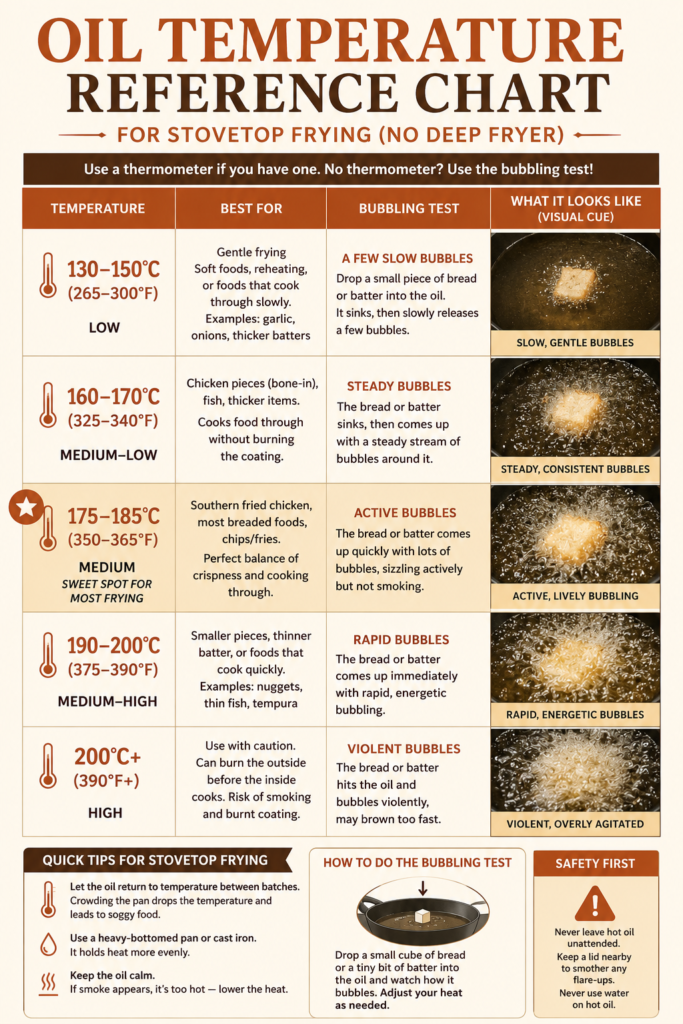
If you don’t have a US-style deep fryer (most UK kitchens don’t), a heavy pan with 5-7cm of oil and a clip-on thermometer is a completely reliable substitute. You’re aiming for around 160-165°C (325-330°F) for the frying oil, which gives the chicken enough time to cook through without the coating burning before the inside is done.
UK-Specific Tips
A few things that catch UK cooks out on their first attempt:
- Oven temperatures: if a recipe calls for a finishing bake to make sure larger pieces are cooked through, look for 180°C fan (200°C conventional) as your reference point, not Fahrenheit.
- Chicken cuts and sizing: UK supermarket chicken thighs and drumsticks tend to run slightly smaller than US cuts, so check for doneness a few minutes earlier than a US recipe suggests.
- Food safety for home frying: never leave hot oil unattended, keep a metal lid nearby to smother any flare-ups (never water), and let the oil come back up to temperature between batches so you’re not steaming your next batch of chicken in lukewarm fat.
🔧 Common Mistakes and How to Fix Them
Soggy coating: usually means the oil temperature dropped too low, often from crowding the pan. Fry in smaller batches and let the oil recover between rounds.
Undercooked inside with a browned outside: the oil was too hot. Drop the temperature slightly and, for larger pieces like thighs, finish in the oven at 180°C fan until the internal temperature reaches 74°C.
Coating falling off in the pan: the dredge wasn’t pressed on firmly enough, or the chicken went straight from the fridge into hot oil. Let brined chicken sit at room temperature for 15-20 minutes before dredging, and press the flour mixture onto the chicken firmly rather than just rolling it through.
🍽️ Serving It the Traditional Way
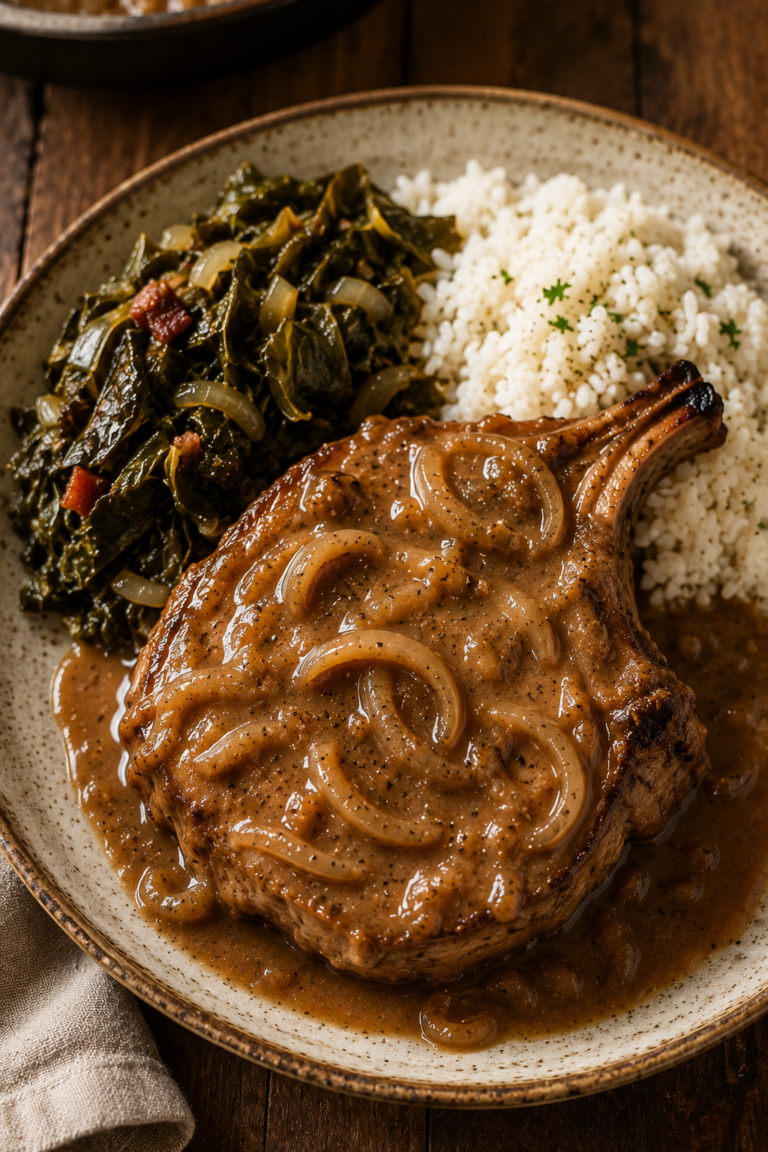
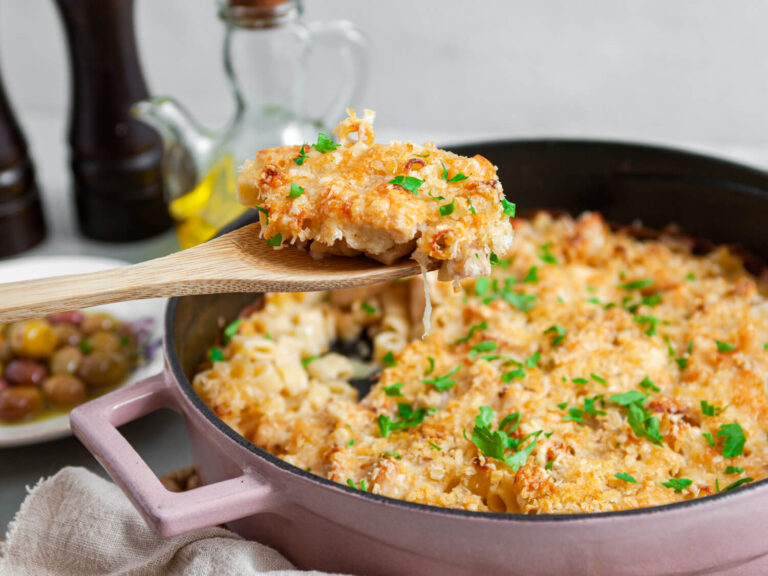
Southern fried chicken is traditionally served alongside sides that balance its richness: think collard greens, mac and cheese, or cornbread. If you want the full spread, our guide to soul food side dishes rounds up the classics, and the Holy Trinity of Southern cooking is worth reading if you want to understand the aromatic base that shows up across so much of this cuisine, even though it’s not part of the chicken itself.
Quick Reference: The Method in Brief
- Brine chicken in buttermilk (or a substitute above) for several hours or overnight.
- Mix a generously seasoned flour dredge (paprika, garlic powder, onion powder, cayenne, black pepper, salt).
- Double-dredge: flour, back through the buttermilk, flour again.
- Fry in 160-165°C oil in a heavy pan or cast iron skillet, in batches, until deep golden and cooked through.
- Rest briefly on a wire rack (not paper towels, which trap steam and soften the coating).
Getting this right is less about a secret ingredient and more about respecting each step: the brine for tenderness, the seasoning for flavour that goes past the surface, and the frying technique for that proper crunch. Once you’ve made it once with these UK-friendly substitutions in mind, it stops feeling like an intimidating US-only recipe and starts feeling like something you can make on a normal Tuesday.