Seafood Gumbo: A Deep South Classic
As an Amazon Associate I earn from qualifying purchases and sometimes recommend products from other sellers at no extra cost you. For more details see my disclosure policy and privacy policy.
Picture yourself in a warm Louisiana kitchen, where the air is thick with the aroma of a slowly simmering pot of seafood gumbo. The rhythmic sound of a wooden spoon stirring the dark roux mingles with the sizzle of the “holy trinity” of vegetables, creating a symphony of Southern cooking at its finest. This isn’t just another soup or stew – it’s a celebration in a bowl that tells the story of Louisiana’s rich cultural heritage through every spoonful.
What is Seafood Gumbo?
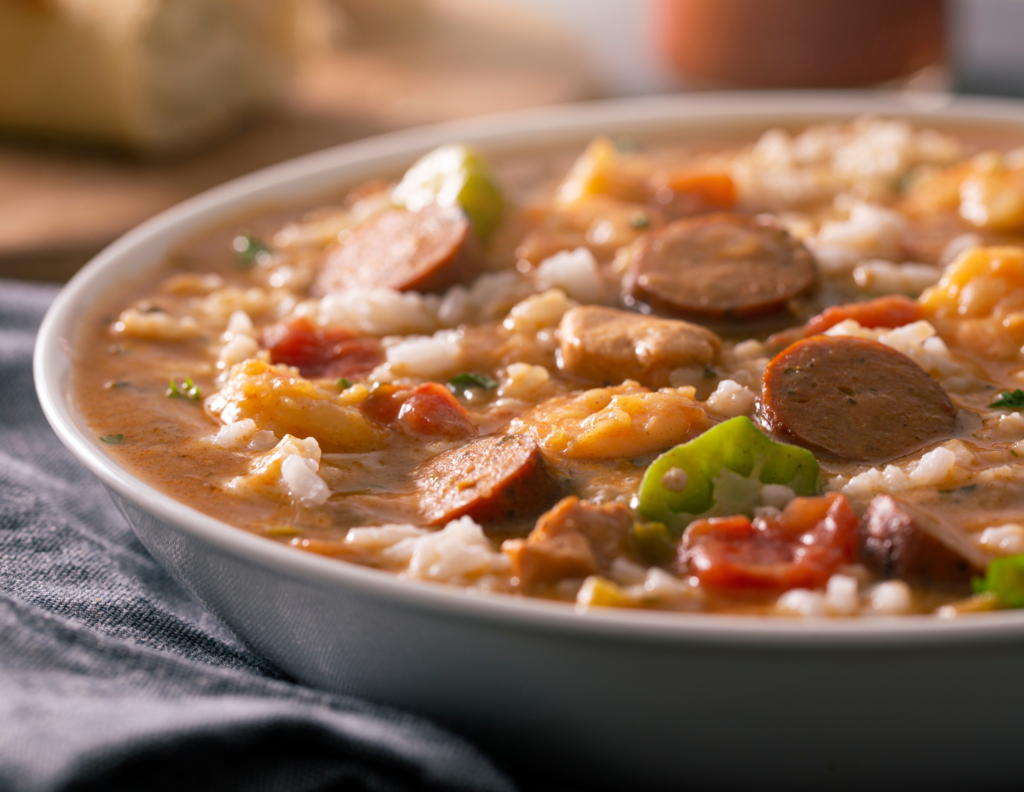
Seafood gumbo stands as one of the most beloved dishes of Louisiana cuisine, bringing together the flavors of the Gulf Coast with French, African, and Native American culinary traditions. This hearty stew combines fresh seafood, aromatic vegetables, and a rich roux base to create a dish that’s become synonymous with Southern hospitality and comfort food. Like its cousin jambalaya, gumbo showcases the incredible fusion of flavors that makes Southern cooking so special.
The story of gumbo parallels the story of Louisiana itself, with each cultural group contributing its own ingredients and techniques. The word “gumbo” comes from the West African word for okra, “ki ngombo,” highlighting the African roots of this iconic dish. Today, it’s considered one of the most cherished comfort food recipes for cold weather.
Key Components
The foundation of any great seafood gumbo starts with a carefully crafted roux, a mixture of flour and fat cooked until it reaches the perfect shade of brown. This technique, borrowed from French cuisine, gives gumbo its characteristic color and depth of flavor. Making the perfect roux requires patience and attention – rushing this step can lead to a bitter taste that no amount of seasoning can fix.
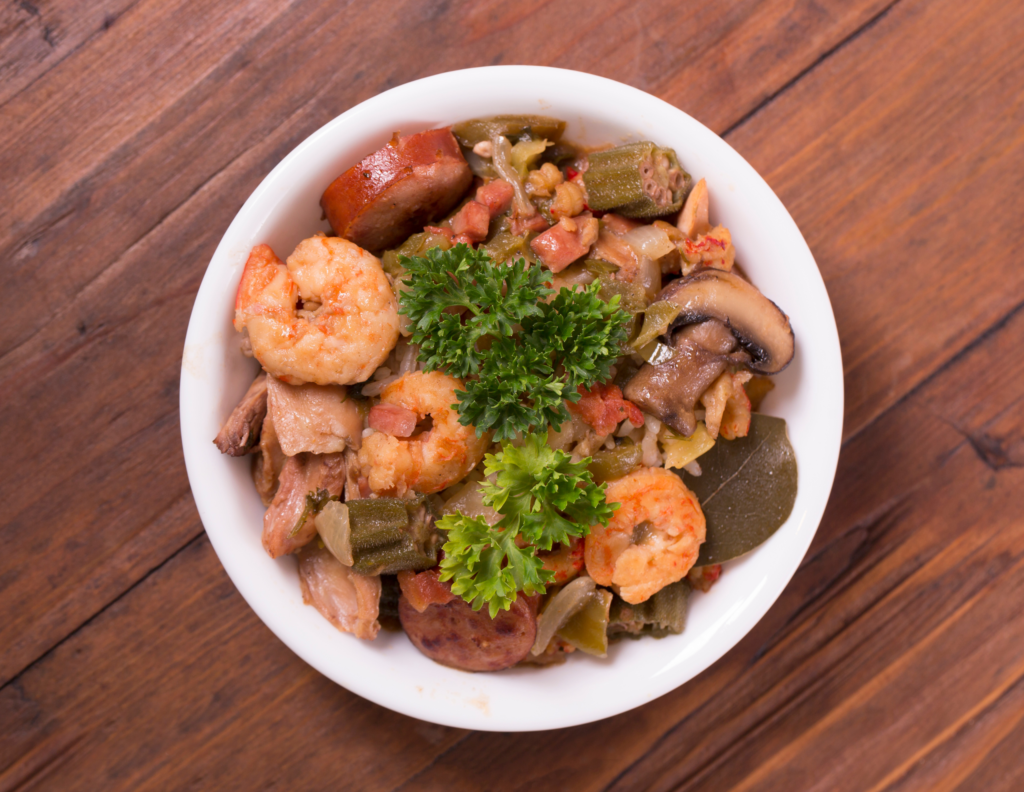
At the heart of gumbo lies the holy trinity, the essential flavor base of Cajun and Creole cooking. This combination of diced onions, celery, and bell peppers creates the aromatic foundation that supports all the other flavors in the dish. When these vegetables hit the hot roux, they release an aroma that signals to everyone in the house that gumbo is on the way.
Regional Variations
Louisiana’s diverse coastal regions each put their own spin on seafood gumbo, similar to how chili con carne has variations around the globe. Each version tells a story about local ingredients and family traditions.
- New Orleans Style: Features a darker roux and often includes tomatoes, setting it apart from other regional versions. Locals might throw in extra seafood like oysters or blue crab alongside the traditional shrimp. Some cooks even add smoked sausage for extra flavor, taking cues from traditional soul food techniques.
- Acadiana (Cajun Country): Known for a lighter roux and typically skips the tomatoes. The focus here stays on Gulf shrimp and local crab, with some cooks adding crawfish when in season. Many families serve their gumbo with a side of homemade coleslaw for a fresh contrast.
- Coastal Style: Found along the Gulf Coast, this version often includes local fish alongside the shellfish, creating a true taste of the sea. Some coastal cooks take inspiration from Cajun shrimp recipes when seasoning their gumbo.
Making It Your Own
While traditionalists might stick to specific ingredients, modern interpretations welcome creativity. The key is understanding how different elements work together to create a harmonious dish.
- Seafood Choices: Beyond the classic shrimp and crab, consider adding scallops, firm white fish, or even octopus. Think about texture as much as flavor – you want each bite to be interesting but not overwhelming.
- Seasonal Additions: Some cooks incorporate seasonal vegetables like okra during summer months or filé powder (ground sassafras leaves) in winter. This approach aligns with other summer comfort foods that make the most of seasonal ingredients.
- Heat Level: The spice profile can range from mild to fiery, usually adjusted with cayenne pepper or hot sauce to taste. Remember that spice should enhance, not overpower, the delicate seafood flavors.
Cultural Significance
In Louisiana, gumbo transcends mere sustenance – it represents family gatherings, holiday celebrations, and community events. Each family guards their own recipe, passed down through generations with careful instructions about everything from stirring techniques to the proper darkness of the roux. Like many comfort food dinner ideas for fall, gumbo brings people together.
Tips for Success
For those looking to master seafood gumbo, consider these key points:
- Stock Matters: Using homemade seafood stock creates a deeper flavor than water or store-bought alternatives. Save your shrimp shells and fish bones to make stock – it’s worth the extra effort.
- Timing is Everything: Add seafood near the end of cooking to prevent it from becoming tough or overcooked. Consider cooking different types of seafood separately and adding them at different times based on their cooking speed.
- Patience with the Roux: A proper roux takes time and constant attention. Many cooks find that using a slow cooker for the final simmering helps develop deeper flavors while freeing up their time for other tasks.
Serving Traditions
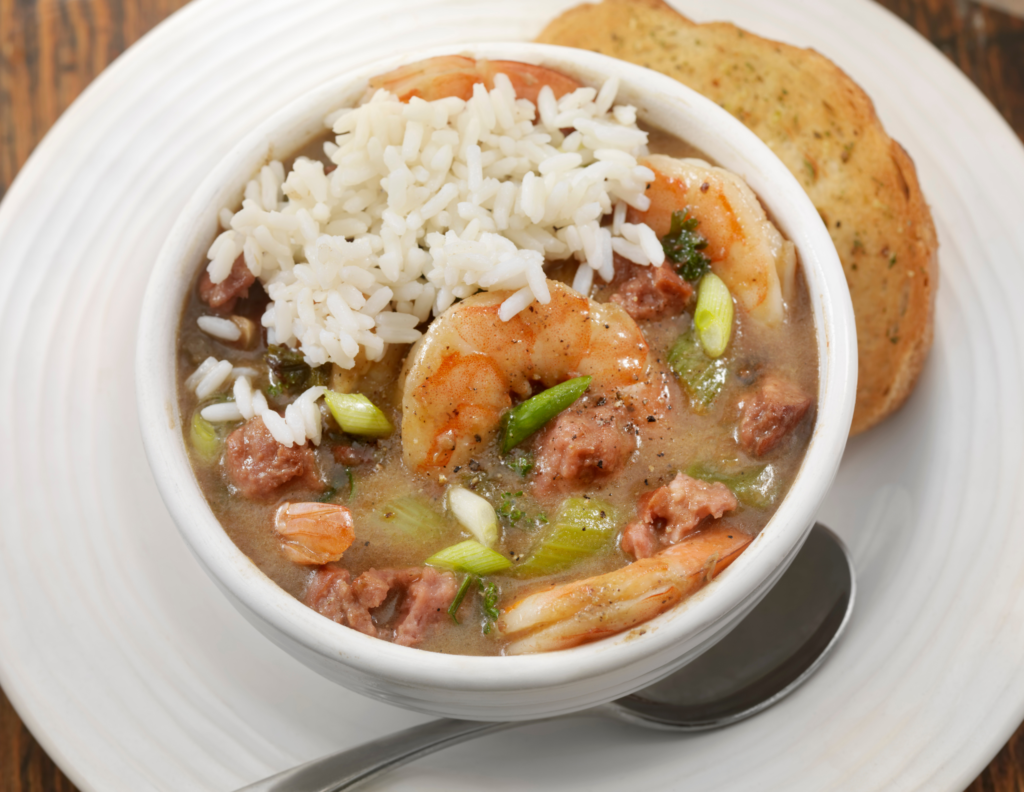
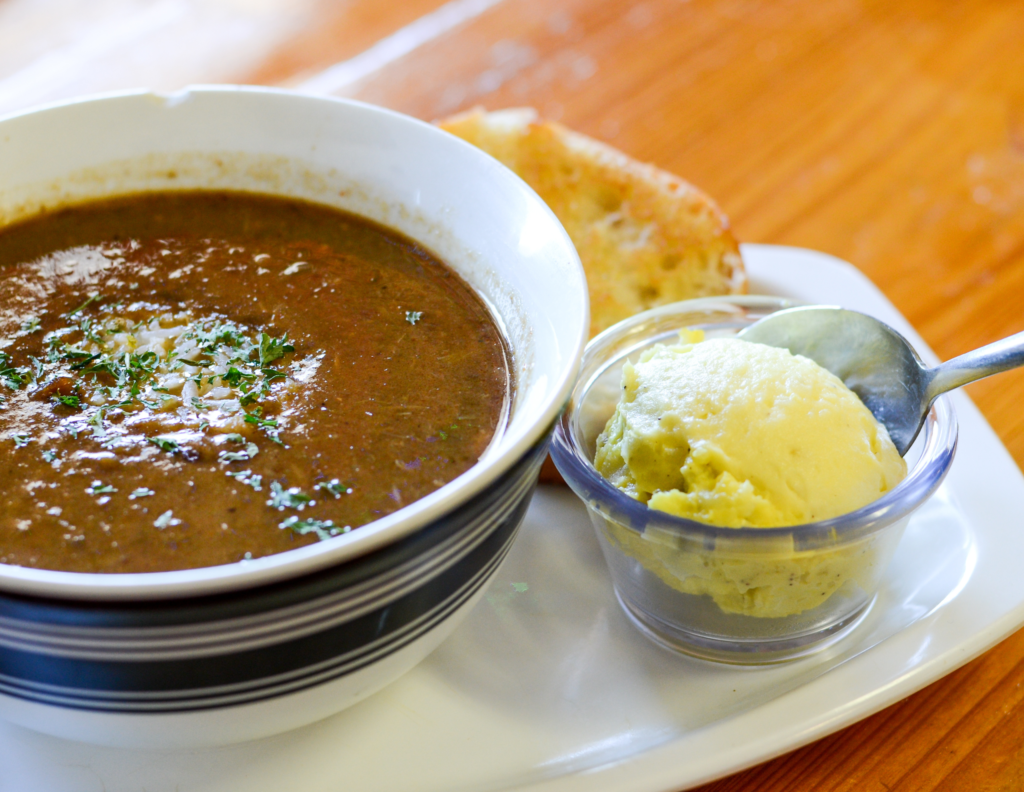
Gumbo traditionally comes served over a scoop of white rice, which helps soak up the flavorful broth. Some families add potato salad on the side or even a scoop right in the gumbo – a regional preference that sparks friendly debates among Louisiana natives. For a complete meal, consider serving your gumbo with crusty French bread and a selection of flavorful Southern sides.
Whether enjoyed on a cold winter evening or at a festive gathering, seafood gumbo continues to evolve while maintaining its place as a cornerstone of Southern cuisine. Each bowl tells a story of cultural exchange, family tradition, and the bountiful waters of the Gulf Coast.