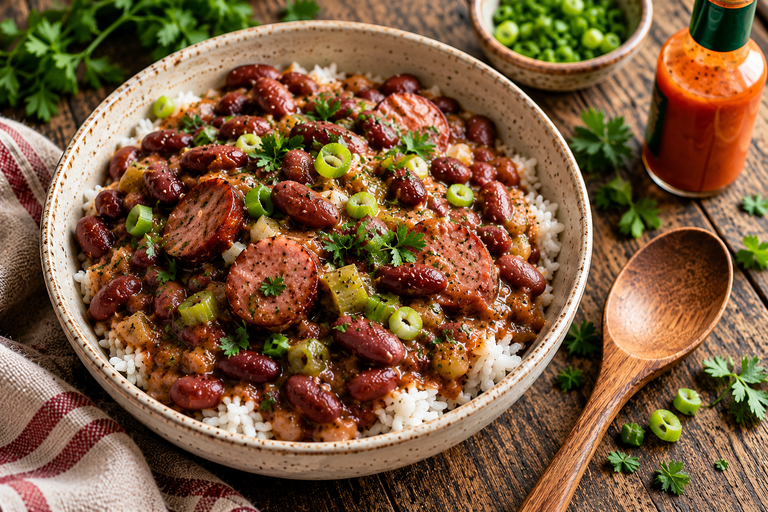
Collard Greens Recipe: Southern Style for UK Kitchens
As an Amazon Associate I earn from qualifying purchases and sometimes recommend products from other sellers at no extra cost you. For more details see my disclosure policy and privacy policy.
Finding a proper collard greens recipe that works with what you can actually buy in Britain is harder than it should be. Real collards are not a supermarket staple here, and most American recipes assume you can grab a bunch on any shop run. This version is written for a UK kitchen, with swaps that work and cooking times that reflect them.
The result is a pot of silky, smoky, deeply savoury greens that taste like they have been looking after themselves all afternoon. The method is simple: build a smoky base, add the greens, then let a low simmer do the work. If you have ever had greens that were tough, bitter or watery, this is the recipe that fixes all three.
💛 Why You’ll Love This Recipe
- Big flavour, little effort: After a short prep, the pot does the work on a low simmer while you get on with the rest of the meal.
- Built for British shops: It uses cavolo nero, spring greens or curly kale if you cannot find true collards, with timings for each.
- Flexible smoky base: Use ham hock, smoked bacon or smoked turkey, or go meat-free with a smoked paprika version.
- Even better the next day: The flavour deepens as it sits, so it suits batch cooking and Sunday dinners.
🥬 Collards vs the UK Swaps
Collard greens are a big, sturdy leafy green from the cabbage family, and they sit at the heart of soul food side dishes. If you want the full background, my explainer on what collard greens are covers it, so I will keep this section to what matters at the hob.
True collards are firm and slightly bitter, and they hold their shape through a long simmer. In the UK you may find them in Afro-Caribbean or Southern-leaning shops, at some markets, or by growing your own. Check what is available near you, as stock varies a lot. My guide to where to buy soul food ingredients in the UK is a good starting point.
When you cannot find them, these swaps work well. They cook differently, so adjust the time.
- Cavolo nero: The closest swap. Its dark, crinkled leaves are sturdy and slightly sweet. Expect it to be tender in roughly 45 to 60 minutes.
- Spring greens: Softer and milder. They cook faster, usually in about 30 to 40 minutes, and can turn mushy if you push them.
- Curly kale: Widely available and a bit more bitter. Allow around 40 to 50 minutes and remove the tough ribs first.
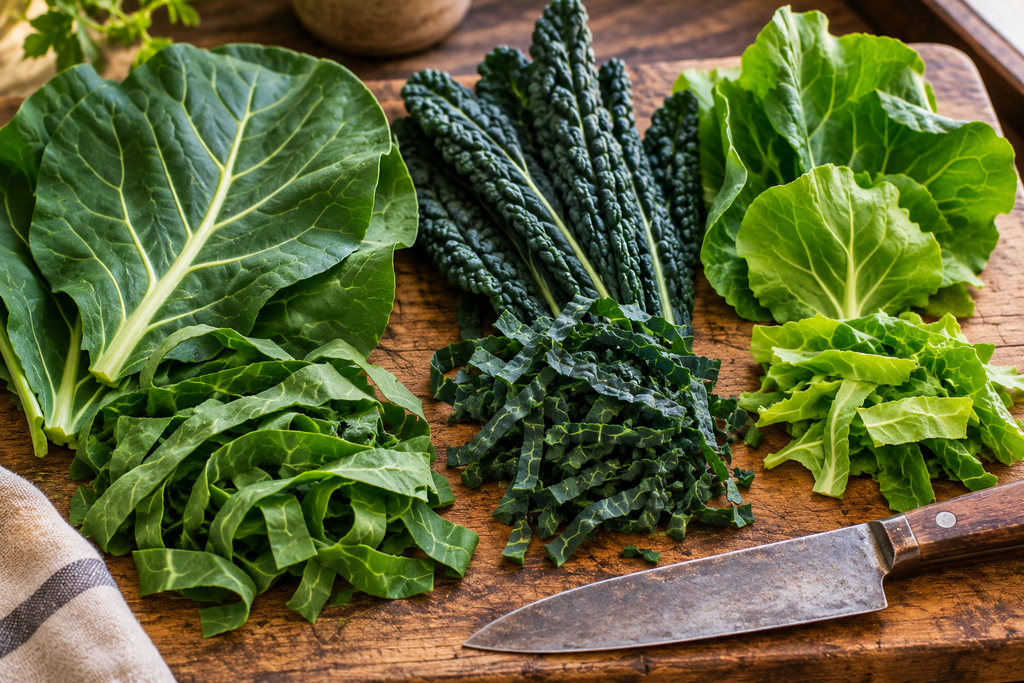
Whichever you choose, taste a piece near the end rather than trusting the clock. Leaf size, age and variety all change the timing.
🧅 Ingredients
You will find the exact amounts in the recipe card further down. Here is what each ingredient does and what to look for.
- Collard greens (or a swap): You need about a kilo before trimming, as stems and ribs come off. Look for deep green, unwilted leaves with no yellowing.
- Smoked ham hock: This gives the pot its smoky, savoury backbone and a little body from the bone. Ask your butcher for a smoked, uncooked hock if you can.
- Onion and garlic: These build the aromatic base. Cook the onion until soft and sweet before the garlic goes in, so it does not catch.
- Chicken stock: It adds depth without overpowering the greens. A good stock cube or fresh stock both work.
- Apple cider vinegar: A splash near the end brightens the whole pot and balances any lingering bitterness.
- Brown sugar: Just a pinch, to take the edge off the greens. You should not taste sweetness.
- Chilli flakes and black pepper: A little heat in the background lifts the smoky flavour.
- Oil or butter: Used to start the onions, with extra flavour if you choose butter.
🔄 Substitutions and Additions
Substitutions:
- Smoked bacon or smoked bacon bones: Use these if you cannot find ham hock. Fry them first to render the fat, and drain off a little if it is very fatty.
- Smoked turkey: Smoked turkey wings or drumsticks give a lighter smoky flavour. You may need a little extra salt.
- Vegetarian version: Skip the meat and use 2 teaspoons of smoked paprika with vegetable stock and a splash of soy sauce. Cook for the same time as the greens require, and finish with a little extra oil for richness.
- Stock: Water works in place of stock when you are using a ham hock, as the hock seasons it.
Additions:
- Hot sauce: A few shakes at the table are a classic finish.
- Diced tomatoes: A small tin stirred in adds a tangy note, in the style of some regional recipes.
- Extra aromatics: A bay leaf or sprig of thyme in the pot is a simple lift.
👩🍳 Instructions
- Prep the greens. Wash the leaves in several changes of cold water until no grit is left. Strip the leaves from the thick stems, stack them, roll and slice into ribbons about 2cm wide.
- Start the base. Heat the oil or butter in a large, heavy pot over a medium heat. Cook the diced onion for 6 to 8 minutes until soft, then add the garlic for 30 seconds.
- Add the smoky element. Nestle in the ham hock and pour over the stock. Bring to the boil, then lower to a gentle simmer.
- Add the greens. Stir in the greens in batches, letting each handful wilt down before adding the next. Add the chilli flakes, pepper and sugar.
- Simmer low and slow. Cover and cook gently until the greens are silky and tender. Check at the lower end of the time guide, then keep going if needed.
- Finish. Lift out the hock, pull off the meat and chop it, then return it to the pot. Stir in the vinegar, then taste and add salt only if needed.
💡 Recipe Tips
- Wash more than you think you need to. Grit hides in the folds, so rinse in a full sink and lift the leaves out rather than draining them back over the grit.
- Slice, do not tear. Even ribbons cook evenly, which helps avoid a mix of mushy bits and chewy ones.
- Fix bitterness at the end. If the pot tastes sharp, add a little more vinegar and a pinch of sugar. A knob of butter also softens the edge.
- Fix toughness with time. If the greens are chewy, they usually need longer on a gentle simmer. Keep the lid on and check every 10 minutes.
- Avoid sogginess. Keep the heat low and stop as soon as the leaves are tender. Spring greens are especially quick to turn.
- Season late. Smoked meat and stock can be salty, so wait until the end to add any salt.
- Use a big pot. Raw greens pile up high, so choose a pot with plenty of room. They wilt down to a fraction of their size within minutes.
- Keep it at a bare simmer. A rolling boil toughens the leaves and clouds the broth. You want the occasional lazy bubble, not a bubbling cauldron.
- Cut the stems finely if you keep them. Collard stems can be cooked, but they take longer. Slice them thinly and add them a little before the leaves.
- Respect the pot likker. Pot likker is the savoury broth left in the pan. Serve the greens with a ladle of it, or use it to cook rice or beans the next day.
🍽️ Serving Suggestions
Collards belong on a full soul food spread. They are a natural partner for rich, sticky mains and creamy sides.
- With ribs: Serve alongside my soul food ribs for a classic plate.
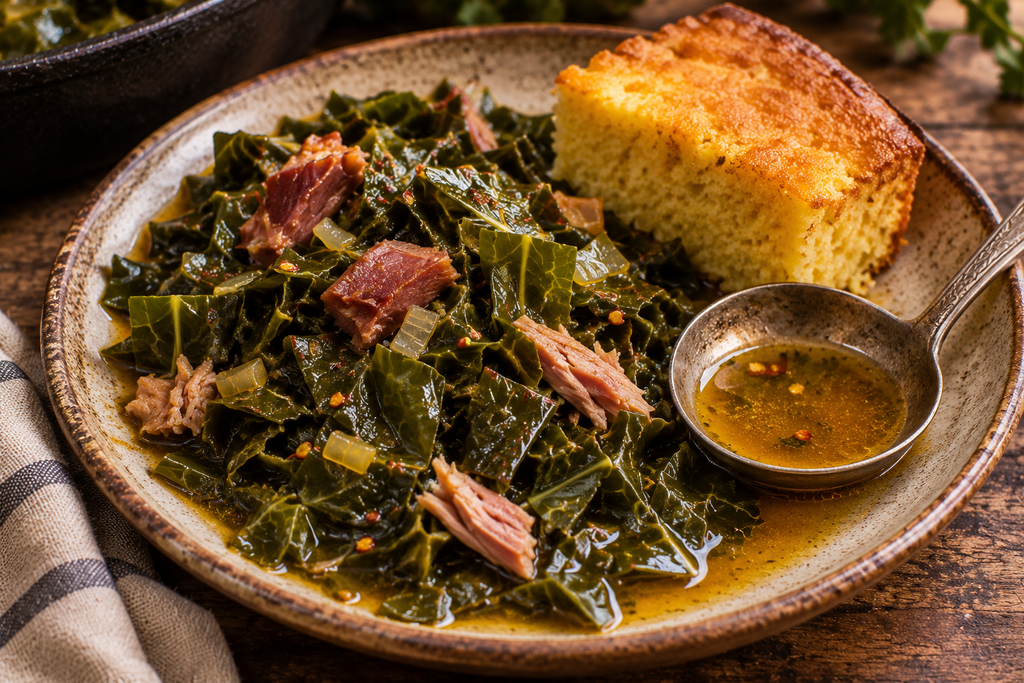
- With cornbread: A wedge of cornbread is ideal for soaking up the pot likker.
- With mac and cheese: Pair with soul food mac and cheese for a proper Sunday table.
- With beans: Add a bowl of Southern black-eyed peas for a hearty, rounded plate.
If you are building a bigger meal, my soul food side dishes roundup has plenty more ideas. A Dutch oven is the ideal pot for this recipe, as it holds a steady, gentle heat.
🧊 Storage & Reheating
Fridge: Cool the greens and pot likker, then store in an airtight container for up to 4 days.
Freezer: Collards freeze well. Portion into heavy-duty freezer bags with some of the pot likker, lay them flat, and freeze for up to 3 months. Defrost overnight in the fridge.
Reheating: Warm gently in a pan over a low heat with a splash of water or stock if it looks dry. Avoid boiling hard, which can make the leaves go soft.
❓ Recipe FAQs
Can I make collard greens ahead of time?
Yes. They taste even better the next day, so cook them a day ahead and reheat gently. Store the pot likker with them so they do not dry out.
Can I freeze collard greens?
Yes. Freeze them in portions with some pot likker for up to 3 months. Defrost in the fridge overnight before reheating.
What can I use instead of collard greens in the UK?
Cavolo nero is the closest swap, followed by curly kale and spring greens. They cook at different speeds, so check the timings above and taste as you go.
Why are my collard greens bitter?
Bitterness is normal in sturdy greens, but it should mellow with long, gentle cooking. A splash of vinegar, a pinch of sugar and a little fat bring it back into balance.
What is pot likker?
It is the flavourful broth left in the pot after simmering the greens with smoked meat. Serve it with the greens, or save it for soups and cooking beans or rice.
📋 Recipe Card
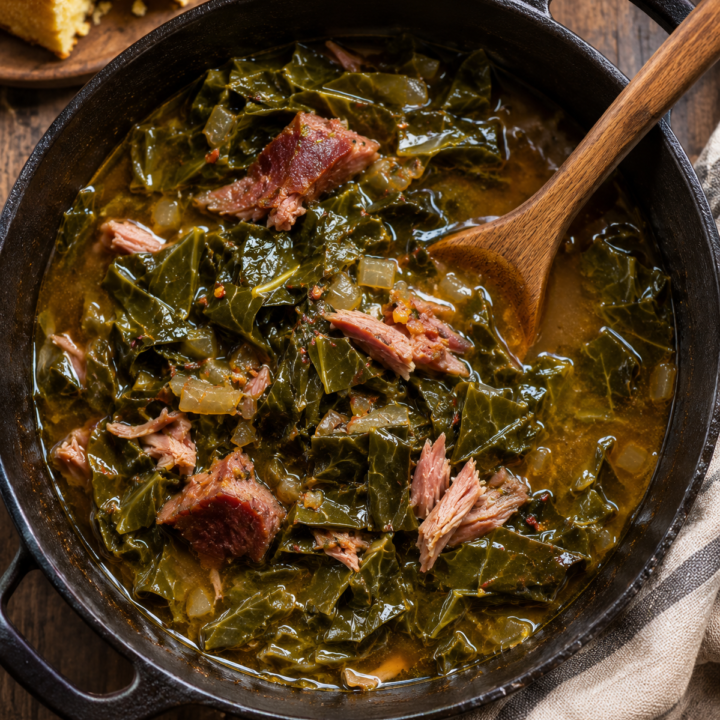
Southern Collard Greens (UK-Friendly)
Slow-simmered Southern collard greens with smoky ham hock, made with collards or easy UK swaps like cavolo nero and spring greens.
Ingredients
- 1kg collard greens (or cavolo nero, spring greens or curly kale)
- 1 smoked ham hock (about 600 to 700g)
- 1 tbsp vegetable oil or butter
- 1 large onion, diced
- 3 garlic cloves, minced
- 1 litre chicken stock
- 1/2 tsp chilli flakes
- 1 tsp light brown sugar
- 2 tbsp apple cider vinegar
- Black pepper and salt, to taste
Instructions
- Wash the greens well, remove the stems, then slice the leaves into 2cm ribbons.
- Soften the onion in the oil in a large pot over a medium heat, 6 to 8 minutes. Add the garlic for 30 seconds.
- Add the ham hock and stock. Bring to the boil, then reduce to a gentle simmer.
- Stir in the greens in batches, then add the chilli, sugar and pepper.
- Cover and simmer gently until tender (see times above), stirring occasionally.
- Remove the hock, shred the meat, and return it to the pot.
- Stir in the vinegar, taste, and add salt only if needed.
Notes
- Vegetarian version: replace the ham hock with 2 tsp smoked paprika, use vegetable stock and add 1 tbsp soy sauce.
- Keep the pot likker to serve alongside the greens.
- Times are approximate and vary with leaf type and age. Taste before serving.
- Fridge: up to 4 days. Freezer: up to 3 months.
Nutrition Information:
Yield: 6 Serving Size: 1Amount Per Serving: Calories: 115Total Fat: 4gSaturated Fat: 0gUnsaturated Fat: 4gCholesterol: 3mgSodium: 167mgCarbohydrates: 14gFiber: 7gSugar: 3gProtein: 8g