Jambalaya Recipe: How I Make This Louisiana Classic in a British Kitchen
As an Amazon Associate I earn from qualifying purchases and sometimes recommend products from other sellers at no extra cost you. For more details see my disclosure policy and privacy policy.
I’ll be honest with you — the first time I tried to make jambalaya, I couldn’t find andouille sausage anywhere. I stood in Sainsbury’s for a solid five minutes staring at the chorizo, wondering if that would do. (Reader: it did.) That’s kind of been my whole experience with soul food — loving a cuisine that wasn’t made with British kitchens in mind, and figuring it out as I go.
Jambalaya has become one of my absolute favourite things to cook. It’s a one-pot rice dish from Louisiana that’s deeply smoky, mildly spicy, and completely satisfying in that way that only proper comfort food can be. Once you’ve got your mise en place sorted, it practically cooks itself — and the leftovers the next day might actually be better than the original.
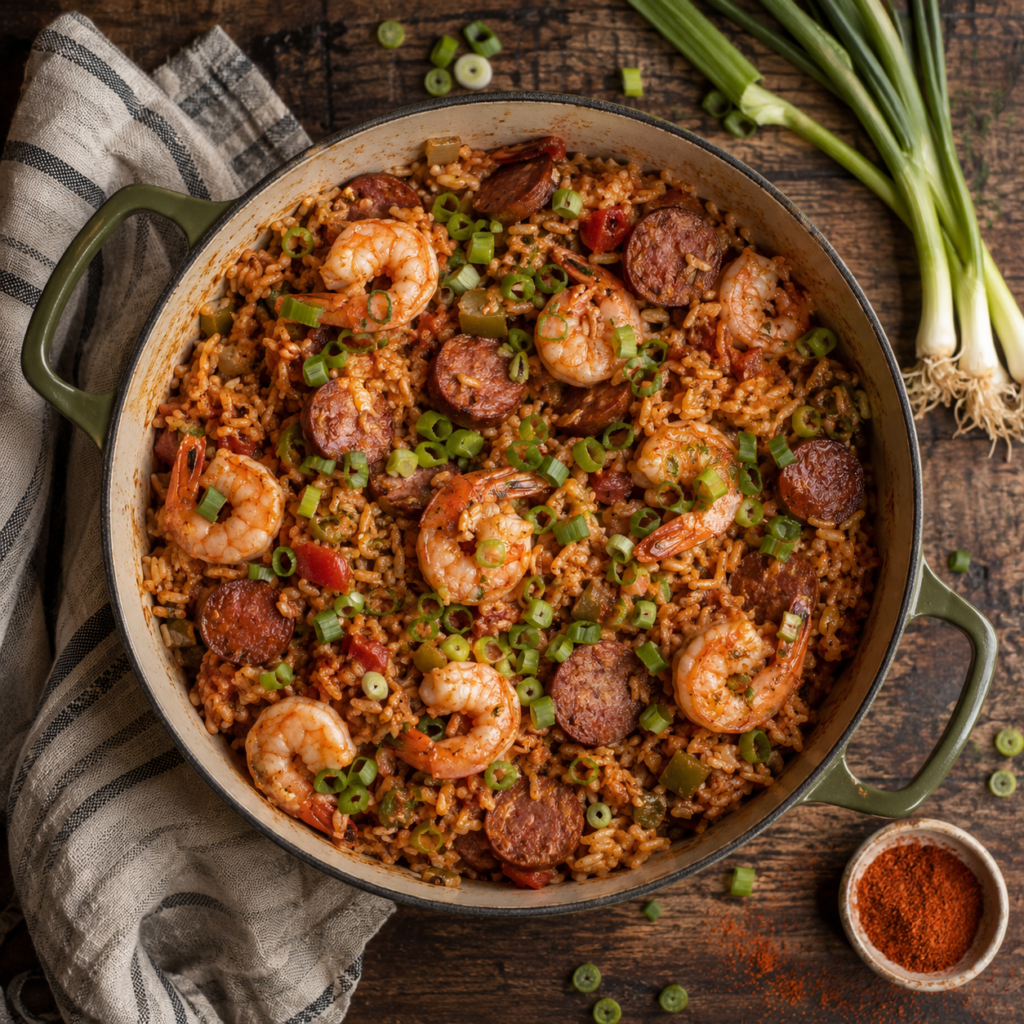
Why You’ll Love This Recipe
- It’s a true one-pot meal. Everything — rice, protein, vegetables, stock — goes into a single pot. Minimal washing up, maximum flavour.
- The spice level is completely in your hands. This recipe is warming rather than blow-your-head-off hot, but you can dial it up or down depending on who’s eating.
- It’s brilliant for batch cooking. Jambalaya keeps well in the fridge for three days and reheats beautifully, making it ideal for meal prep.
- It’s endlessly adaptable. Chicken and sausage one week, shrimp the next — the base recipe stays the same and you vary the protein based on what you’ve got.
What is Jambalaya?
Jambalaya is a rice-based one-pot dish that originated in Louisiana, rooted in the food traditions of Cajun and Creole cooking. It’s thought to have evolved when Spanish settlers tried to recreate paella using whatever local ingredients they had — wild game, local vegetables, and the West African spice influences already present in Louisiana cooking.
The name itself is believed to come from the Spanish word for ham (jamón) and the West African word for rice (ya ya). Whether that’s true or not, the dish that resulted is something genuinely special: rich, layered in flavour, and cooked all in one pot. There are two main styles — Creole jambalaya (which includes tomatoes and tends to be the “red” version) and Cajun jambalaya (no tomatoes, darker and smokier). This recipe leans Creole, which is the version most people outside Louisiana are familiar with.
If you want to understand the flavour foundations of jambalaya, it’s worth reading about the holy trinity of Cajun and Creole cooking — the onion, celery, and bell pepper base that underpins so much of this cuisine.
Ingredients
Here’s everything you need for four generous servings. I’ve included notes on where to find things if you’re shopping in the UK.
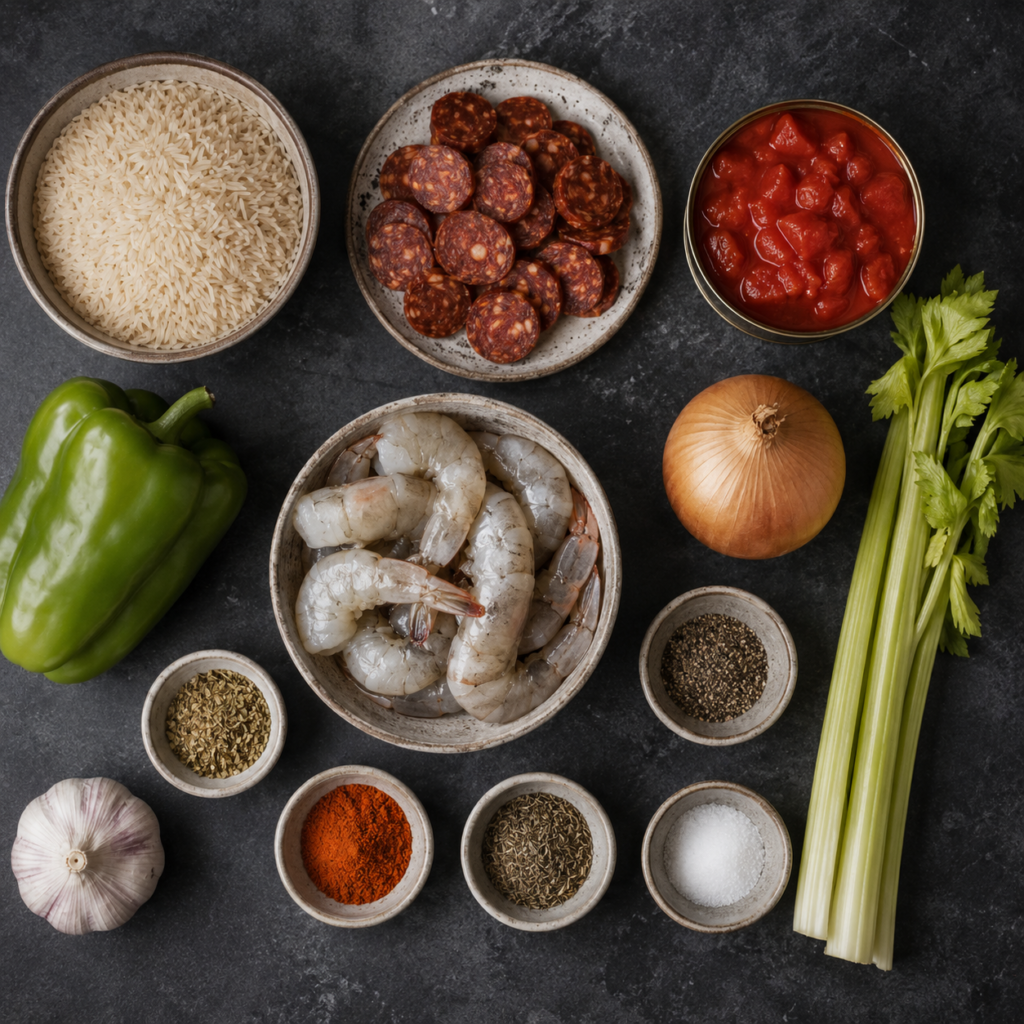
- Olive oil — Just a tablespoon to get the sausage browning. You can use a neutral oil like sunflower if you prefer.
- Andouille sausage (1 lb / 450g), sliced — This is the hardest ingredient to find in the UK. Andouille is a heavily smoked pork sausage with a distinctive, almost funky flavour. You can sometimes find it in specialist American food shops or online, but see the substitutions section below for good alternatives.
- Onion (1 large), chopped — White or brown onion both work here. This forms part of the holy trinity alongside the celery and pepper, so don’t be tempted to skip it.
- Green bell pepper (1), chopped — The classic choice for jambalaya. Green pepper has a slightly bitter edge that works well with the smoky sausage. Red pepper is sweeter and also works if that’s what you have.
- Celery (3 stalks), chopped — The third corner of the holy trinity. It adds an aromatic, slightly vegetal quality to the base that you’d definitely notice if it was missing.
- Garlic (4 cloves), minced — Fresh garlic gives a depth you won’t get from garlic powder alone. Mince it finely so it cooks into the vegetables evenly.
- Diced tomatoes (1 can / 400g) — This is what makes it a Creole-style jambalaya. A standard tin of chopped tomatoes works perfectly. If your tin is quite watery, you can drain off a little of the liquid.
- Dried thyme (1 tsp) — A key herb in Cajun and Creole cooking. It adds an earthy, slightly floral note.
- Dried oregano (1 tsp) — Works alongside the thyme to build that layered herbal flavour.
- Cayenne pepper (½ tsp) — Gives the dish its gentle heat. Start with half a teaspoon and add more to taste — you can always season up but you can’t season down.
- Long-grain white rice (2 cups / 400g) — Long-grain is important here. Basmati actually works really well in this dish and is easy to find. Short-grain or risotto rice will go stodgy.
- Chicken stock (4 cups / 950ml) — Use a good-quality stock, either homemade or a decent shop-bought variety. The rice absorbs this, so it contributes a lot to the overall flavour. You can use stock cubes — just make sure you’re not adding too much extra salt elsewhere.
- Raw king prawns (1 lb / 450g), peeled and deveined — Added right at the end, they only need about five minutes to cook through. Frozen raw prawns work just as well as fresh — just defrost them first.
- Salt, black pepper — Season throughout cooking and taste before serving.
- Spring onions / green onions — These go on as a garnish at the end and add a fresh, mild onion note that cuts through the richness of the dish.
Substitutions and Additions
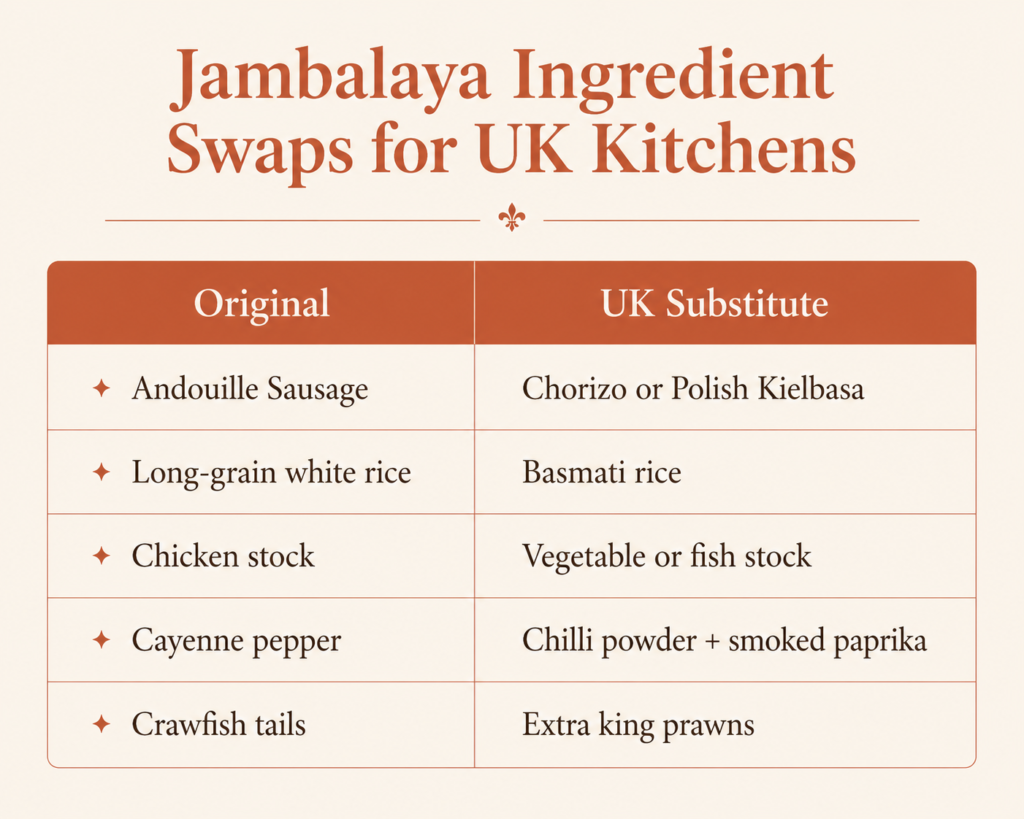
- Andouille sausage → This is genuinely the one ingredient worth seeking out, but if you can’t find it, chorizo (the semi-cured, sliceable kind, not the soft cooking chorizo) is the best substitute — it’s smoky, porky, and slices well. Smoked kielbasa or any good-quality smoked pork sausage also works. If you’re shopping in a large Tesco or Asda, look for Polish smoked sausage in the chilled section — it’s a solid stand-in.
- Prawns → If you’d rather use chicken, dice one or two boneless thighs and brown them with the sausage at the start. Chicken thighs stay juicier than breast in a long-cooked dish. You can also do a combination of chicken and prawns, which is a really popular variation.
- Long-grain white rice → Basmati is a great substitute and easy to find. Brown rice works but will need an extra 15–20 minutes cooking time and possibly a splash more stock. Avoid risotto rice or pudding rice.
- Cayenne pepper → If you don’t have cayenne, a good pinch of regular chilli powder works fine. For a richer spice profile, add a teaspoon of smoked paprika alongside — it adds colour and depth. You can find a full breakdown of Cajun spices in the soul food ingredients guide.
- Chicken stock → Vegetable stock is fine if you’re adapting for dietary reasons. Fish stock or a light seafood stock works particularly well if you’re doing a prawn-only version.
- Add crawfish → If you can get hold of crawfish tails (sometimes available in large supermarkets or online), adding a handful alongside the prawns makes the dish feel particularly authentic.
- Add okra → Sliced okra added with the vegetables gives a lovely slightly silky texture and is a classic addition in Southern cooking. Collard greens are another Southern staple worth exploring if you’re curious about the wider vegetable traditions of this cuisine.
Instructions
- Heat the olive oil in a large, deep pan or Dutch oven over medium-high heat. Add the sliced andouille sausage and cook for 4–5 minutes, turning occasionally, until browned on both sides. Remove from the pan and set aside on a plate.
- In the same pan (don’t wipe it out — those browned bits on the bottom are flavour), add the chopped onion, green pepper, and celery. Cook over medium heat for 5–6 minutes, stirring regularly, until the vegetables have softened and are just starting to colour.
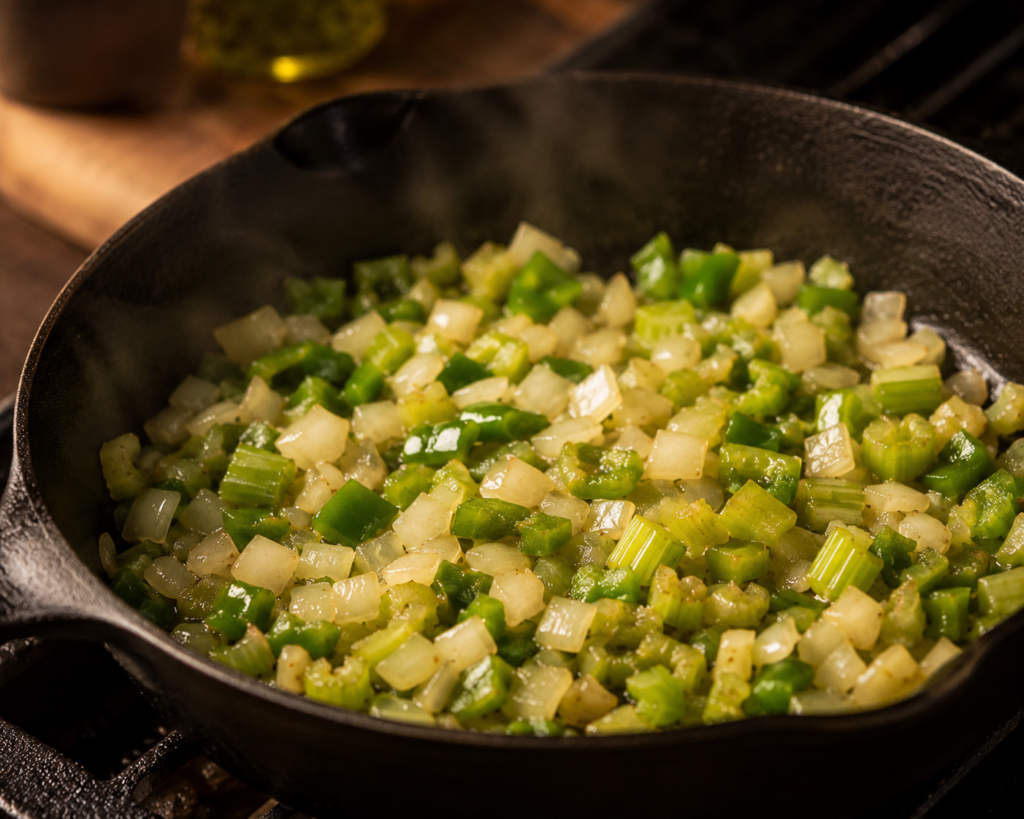
- Add the minced garlic and cook for another minute until fragrant.
- Stir in the tinned tomatoes, dried thyme, dried oregano, and cayenne pepper. Cook for 5 minutes, stirring occasionally, allowing everything to come together and the tomatoes to reduce slightly.
- Add the uncooked rice to the pan and stir well so every grain gets coated in the vegetable and tomato mixture.
- Pour in the chicken stock and stir to combine. Bring to the boil.
- Once boiling, reduce the heat to low, add the browned sausage back to the pan, and place a tight-fitting lid on top. Simmer for 20 minutes, without lifting the lid, until the rice is tender and has absorbed the liquid.
- Remove the lid and nestle the raw prawns into the rice. Replace the lid and cook for a further 4–5 minutes until the prawns are pink and cooked through.
- Remove from the heat and leave to rest, lid on, for 5 minutes before serving.
- Season with salt and black pepper, then garnish with chopped spring onions.
Recipe Tips
- Don’t lift the lid while the rice cooks. I know it’s tempting, but the steam inside the pot is doing a lot of the work. Every time you lift the lid you lose that and risk the rice cooking unevenly.
- Brown the sausage properly. This isn’t just about cooking it through — the caramelisation adds a layer of smoky depth to the whole dish, and those browned bits left in the pan are pure flavour.
- Use the resting time. The five-minute rest at the end allows the rice to absorb any remaining liquid and the flavours to settle. Don’t skip it.
- Taste before you add salt. Depending on how salty your sausage and stock are, you may need very little extra seasoning. Always taste first.
- Make it ahead. Jambalaya reheats brilliantly. If you’re making it the night before, slightly undercook the rice so it doesn’t become too soft when reheated.
- Add the prawns last. Prawns cook very quickly — 4–5 minutes is all they need. If you add them too early they’ll become rubbery.
Serving Suggestions
Jambalaya is very much a complete meal in itself, so you don’t need much on the side. That said, a simple green salad or some crusty bread to mop up the sauce is never a bad idea.
If you’re putting on a bigger spread, this sits beautifully alongside some Southern soul food sides — particularly something like coleslaw, which provides a cool, creamy contrast to the warm spice of the jambalaya. My homemade coleslaw guide has a simple recipe that works really well here.
For a full Louisiana-inspired dinner, you could also serve a smaller portion of jambalaya alongside seafood gumbo — the two dishes together feel genuinely celebratory. And if you’ve got people who like heat, a bottle of hot sauce on the table is always welcome.
If you want something to follow this up, the Cajun shrimp skillet leans into similar flavours and makes a great addition to a Cajun-themed dinner night.
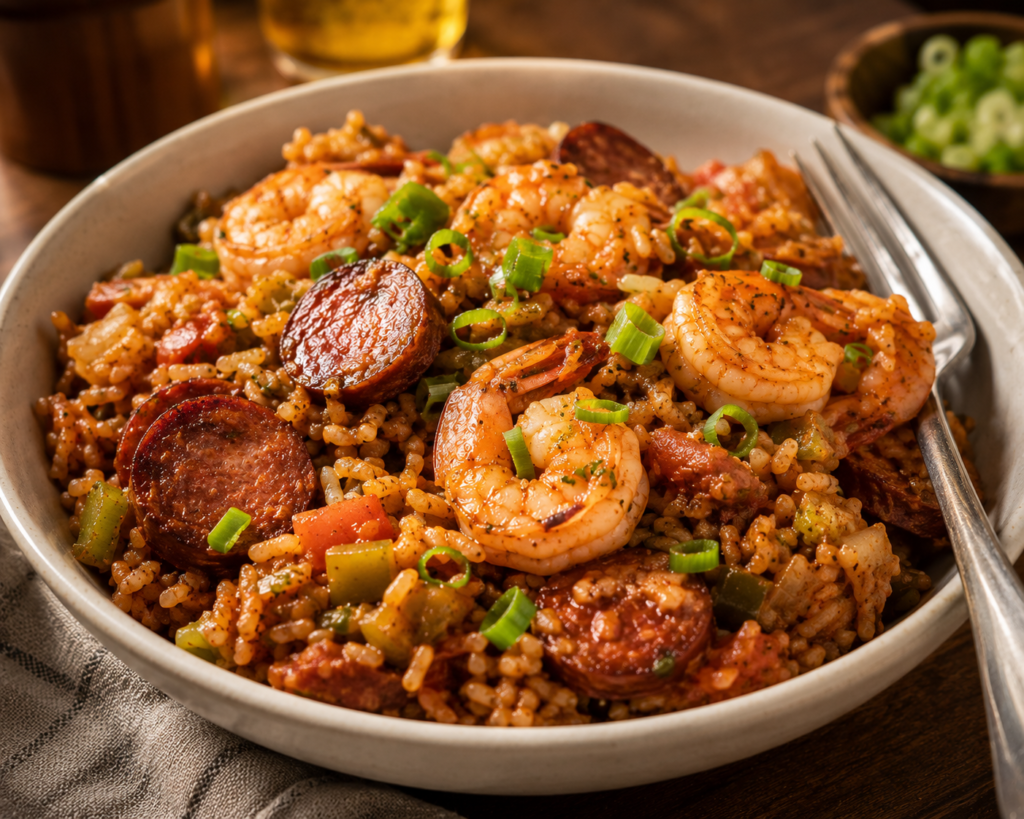
Storage & Reheating
Leftover jambalaya keeps well in an airtight container in the fridge for up to three days. The rice will absorb any remaining liquid as it sits, so when reheating you’ll want to add a splash of water or stock to loosen it. Reheat gently in a pan over low heat with the lid on, or in the microwave covered with a damp piece of kitchen roll to stop it drying out.
Jambalaya can be frozen, though the texture of the rice does change slightly after freezing — it tends to become a little softer. If you know you’re planning to freeze it, undercook the rice slightly before you do. Defrost thoroughly in the fridge overnight before reheating. I wouldn’t freeze it if it contains prawns — it’s better to freeze the base and add fresh prawns when you reheat.
Recipe FAQ
What’s the difference between Cajun and Creole jambalaya? The main difference is tomatoes. Creole jambalaya — the style used in this recipe — includes tinned tomatoes, which gives it a reddish colour and a slightly sweeter flavour. Cajun jambalaya uses no tomatoes and is often darker in colour, relying on a deeper browned base for its flavour. Both versions use the holy trinity of onion, celery, and bell pepper.
Can I make jambalaya without a Dutch oven? Absolutely. Any large, deep pan with a tight-fitting lid works well. The key is that the lid seals the steam in while the rice cooks. If your pan lid isn’t a great fit, you can cover the top with foil before pressing the lid on.
My rice came out mushy — what went wrong? A few things can cause this: too much liquid, lifting the lid during cooking (which lets steam escape unevenly), or stirring the rice after it’s absorbed the liquid. Follow the quantities in the recipe closely and resist the urge to peek.
Is jambalaya spicy? At the quantities in this recipe, it’s warming rather than hot — most people would describe it as mildly spicy. If you’re cooking for kids or spice-sensitive people, you can reduce the cayenne to a quarter teaspoon or leave it out entirely. If you want more heat, add extra cayenne or a dash of hot sauce when serving.
Can I use leftover cooked rice? Jambalaya is really designed to be made with raw rice that absorbs the stock as it cooks — that absorption is what gives it its distinctive texture. You could technically make a version with cooked rice but the result would be quite different, closer to a fried rice dish. For best results, use uncooked long-grain rice.
Where can I find andouille sausage in the UK? Your best bet is an online American food retailer — there are several that ship to the UK. Otherwise, a good Spanish deli may stock similar smoked sausage. Chorizo (the firm, sliceable type) or Polish kielbasa from the chilled section of a large supermarket are both excellent substitutes that are widely available.
Jambalaya
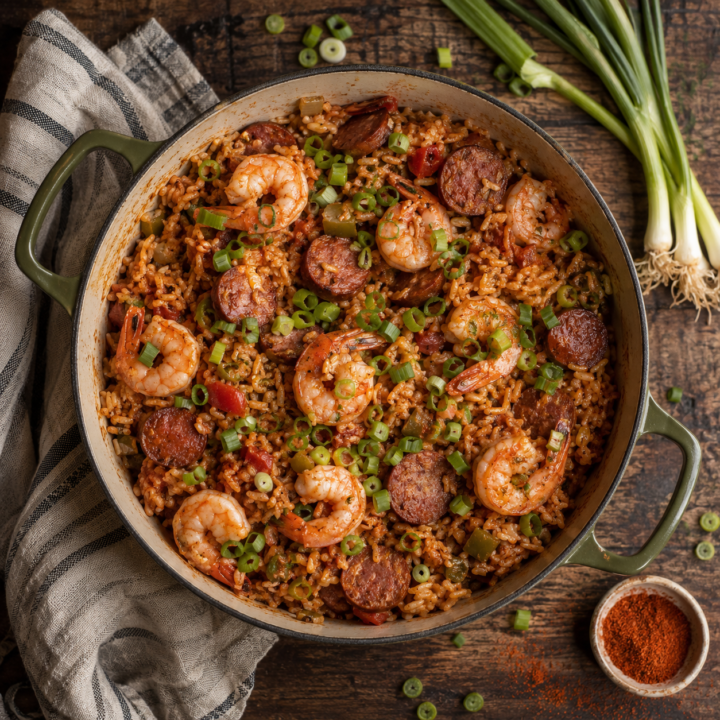
A smoky, mildly spicy Louisiana one-pot rice dish with andouille sausage and king prawns. Made Creole-style with tomatoes, the holy trinity of vegetables, and a blend of Cajun herbs and spices.
Ingredients
- 1 tbsp olive oil
- 450g (1 lb) andouille sausage or chorizo, sliced
- 1 large onion, chopped
- 1 green bell pepper, chopped
- 3 stalks celery, chopped
- 4 cloves garlic, minced
- 1 x 400g tin chopped tomatoes
- 1 tsp dried thyme
- 1 tsp dried oregano
- ½ tsp cayenne pepper
- 400g (2 cups) long-grain white rice, uncooked
- 950ml (4 cups) chicken stock
- 450g (1 lb) raw king prawns, peeled and deveined
- Salt and black pepper to taste
- Spring onions, chopped, to garnish
Instructions
Notes
Nutrition Information:
Yield: 4 Serving Size: 1Amount Per Serving: Calories: 704Total Fat: 39gSaturated Fat: 12gUnsaturated Fat: 27gCholesterol: 303mgSodium: 2100mgCarbohydrates: 42gFiber: 3gSugar: 6gProtein: 45g