Is Ribs Soul Food? (And What Makes Soul Food Soul Food)
As an Amazon Associate I earn from qualifying purchases and sometimes recommend products from other sellers at no extra cost you. For more details see my disclosure policy and privacy policy.
If you’ve ever stood over a rack of slow-cooked, deeply seasoned ribs and wondered whether what you’re making counts as soul food — you’re not alone. It’s a question that comes up a lot, and the answer is more interesting than a simple yes or no. Ribs absolutely can be soul food, but the why behind that matters just as much as the answer itself.
I’ve spent a lot of time learning about this cuisine from a British kitchen, and understanding what actually defines soul food has changed the way I cook it. So let’s get into it properly.
What Is Soul Food, Really?
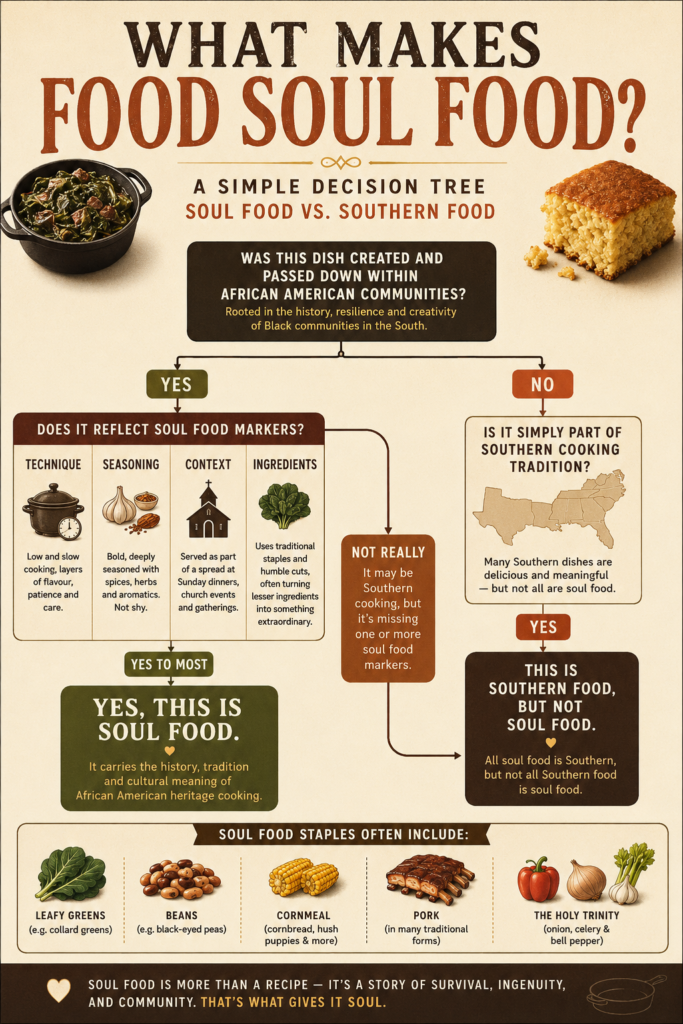
Soul food is African American heritage cooking — Southern dishes that were eaten, prepared, and passed down within Black communities, particularly those who migrated from the US South during the Great Migration. That historical context isn’t just background detail; it’s the whole point.
The cuisine has roots that stretch back to West and Central African foodways, blended over generations with European and Native American influences. Enslaved Africans in the American South were often given the least desirable cuts of meat and discarded ingredients — and from those limited, often overlooked ingredients, they created nourishing, deeply flavourful food that could fuel people through brutal physical labour.
From Survival to Celebration
What started as necessity became culture. Techniques were refined, flavours developed, and these dishes became tied up with identity, memory, and community in ways that go far beyond the plate.
Staples include beans, leafy greens (like the collard greens you’ll find all over a traditional spread), cornmeal used in everything from cornbread to hush puppies, and pork in many different forms. The holy trinity of onion, celery, and bell pepper shows up repeatedly too, especially in dishes like jambalaya and seafood gumbo.
Not All Southern Food Is Soul Food
This is worth pausing on. Writers and food historians are clear on this distinction: while all soul food is Southern, not all Southern food is soul food. The difference lies in the specific Black history, techniques, ingredients, and community context behind a dish. Soul food isn’t just a flavour profile — it’s a cuisine born from survival and creativity, one that carries the weight of cultural memory in every bite.
The term “soul food” itself was popularised during the 1960s and 70s alongside the Black Power movement, as a conscious act of claiming and celebrating Black culinary heritage. That history is part of what makes the food meaningful.
So, Are Ribs Soul Food?
Yes — and it’s not even close to a grey area. Ribs are widely treated as a core soul food main, especially in the context of Southern soul food BBQ spreads. They appear at the top of entrée lists on soul food recipe sites alongside dishes like okra, black-eyed peas, mac and cheese, and biscuits.
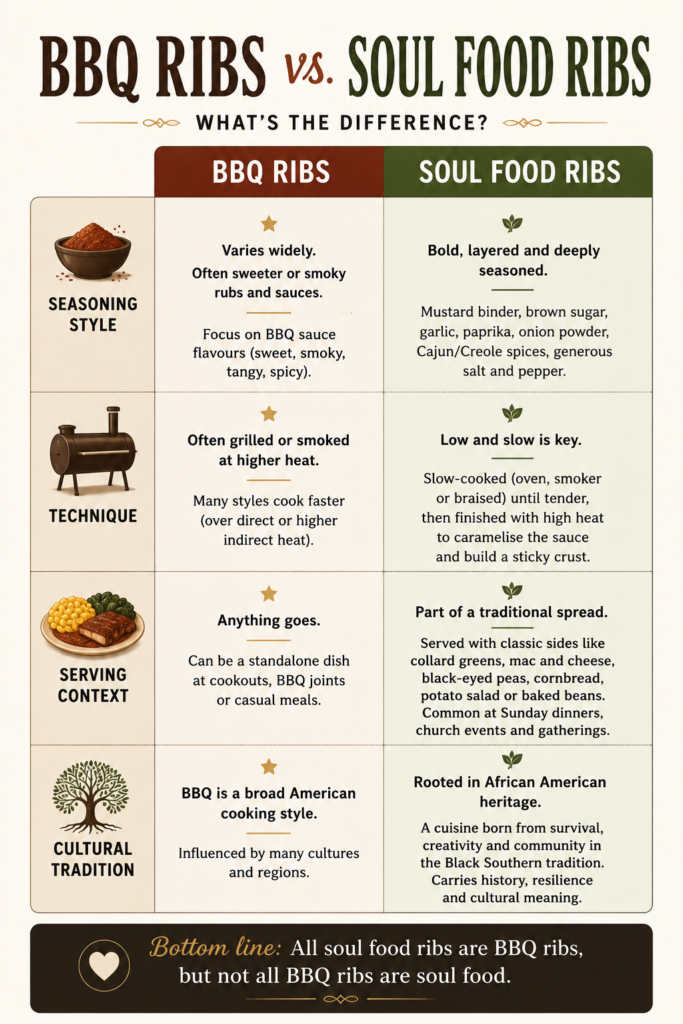
The more useful framing is this: ribs are soul food when they’re cooked in the Black Southern tradition — slow-cooked, heavily seasoned, and served as part of a soul food spread. You can find ribs at all kinds of barbecues, but the technique, the seasoning, and the context are what place them firmly within soul food.
The Role of Pork in Soul Food
Pork is central to the tradition. Historically, enslaved workers were given pork scraps — trotters, ears, offal, less prized cuts — and Black cooks turned those into essential dishes. Ribs sit squarely within that broader pork tradition, alongside dishes like slow cooker baked beans with bacon that carry a similar spirit of making something deeply satisfying from humble ingredients.
That lineage matters. It’s part of why ribs feel like such a natural fit for a soul food spread rather than just a generic BBQ item.
What Makes Ribs Feel Like Soul Food?
It comes down to three things: technique, seasoning, and context. Get all three right and there’s no ambiguity about what you’re cooking.
Technique
Soul food ribs are almost always slow-cooked — whether that’s low and slow in the oven, in a smoker, or covered and braised — to get them properly tender. Then they get a final blast of higher heat to caramelise the sauce or glaze and build that sticky, slightly charred exterior. That combination of patience and heat is what sets them apart from ribs that are just thrown on a hot grill.
The approach echoes the kind of low-and-slow cooking you see throughout soul food — think about how long collard greens are cooked down, or the way a proper seafood gumbo builds over time. Soul food doesn’t rush.
Seasoning
The seasoning profile for soul food ribs is bold. You’ll typically see:
- A mustard “binder” rubbed onto the rack before seasoning
- Brown sugar for sweetness and caramelisation
- Garlic, paprika, and onion powder as the base
- Cajun or Creole spice blends for depth and heat
- Generous salt and black pepper throughout
This heavier, more complex seasoning is one of the markers that food historians note when distinguishing soul food from broader “country” Southern cooking. It’s not shy, and it shouldn’t be.
Context
Where and how ribs are served matters. Soul food ribs typically show up on plates with classic side dishes — collard greens, mac and cheese, cornbread, potato salad, or baked beans — especially at Sunday dinners, church gatherings, and summer cookouts. They’re rarely eaten in isolation; they’re part of a spread, part of an occasion.
That communal dimension is something that writers and cooks consistently emphasise about soul food. It’s as much about the feeling and the people around the table as it is about the food itself.
Soul Food, Barbecue, and Where They Overlap
American barbecue and soul food share deep roots in Black cooking traditions, and the overlap is significant. Many of the techniques we associate with “barbecue” — smoking, slow-cooking over indirect heat, building complex spice rubs — were developed and refined by Black cooks.
For a lot of Black cooks, soul food is as much about the memories, the relationships, and the community around a meal as the ingredients themselves. That emotional dimension is part of what the food carries.
Modern soul food has evolved too. Dishes like ribs exist in both classic and contemporary versions — you’ll find them on the menus of high-end soul food restaurants just as readily as at backyard cookouts. But they still sit inside that tradition, regardless of how they’re plated.
For a UK audience, it might help to think about it this way: soul food carries cultural memory in the same way Caribbean Sunday dinners or Nigerian party jollof do here in Britain. The food is tied to identity and history in ways that go well beyond the recipe.
Making Soul Food Ribs in a British Kitchen
One of the most common questions I get asked is about the ingredients — specifically, what to do when you can’t find certain American products here in the UK.
The good news is that ribs are one of the more accessible soul food dishes to make over here. Pork ribs — both baby back and spare ribs — are widely available at supermarkets and butchers. The spices you need (paprika, garlic powder, onion powder, brown sugar, cayenne) are all easy to find. Cajun seasoning blends are stocked in most large supermarkets now, or you can make your own using the recipe from my Cajun shrimp skillet post.
The one area where the UK differs is the smoker culture. Smoking ribs over wood for hours is less common here and requires equipment most home cooks don’t have. The oven method — covered low and slow, then finished under a hot grill — gives genuinely excellent results and is much more practical for a British kitchen.
What to Serve with Soul Food Ribs
Ribs on their own are great, but ribs as part of a proper spread are something else entirely. The classic pairings from soul food tradition work perfectly:
- Collard greens — the bitterness of the greens cuts through the richness of the ribs beautifully. My guide to collard greens covers everything you need to know about cooking them.
- Baked beans — slow-cooked, slightly smoky, and sweet. My slow cooker baked beans with bacon are a great option.
- Coleslaw — a cool, creamy coleslaw alongside hot ribs is one of those combinations that just works. There’s a solid recipe in the ultimate guide to homemade coleslaw.
- Soul food sides — for the full spread, the 10 classic soul food side dishes post is worth a read before you plan your menu.
For dessert, something sweet is expected. Penuche frosting on a simple cake would round things off nicely — it’s one of the most genuinely Southern things on this site.
Recipe FAQ
Are ribs traditional soul food? Yes. Ribs — particularly pork ribs — have been part of soul food cooking for generations. They fit naturally within the cuisine’s tradition of using pork in many forms, slow-cooking for tenderness, and seasoning boldly. They appear consistently on soul food menus and recipe lists alongside dishes like collard greens, mac and cheese, and cornbread.
What’s the difference between BBQ ribs and soul food ribs? The overlap is real — soul food ribs and BBQ ribs share techniques and flavours. The difference is in the cultural context and tradition behind the cooking. Soul food ribs come specifically from the Black Southern cooking tradition: the seasoning tends to be heavier, the pork is often cooked with a nod to the offal-inclusive tradition of the cuisine, and they’re typically served as part of a soul food spread rather than as a standalone BBQ item.
What cut of ribs is best for soul food? Both baby back ribs and spare ribs work well. Spare ribs have more fat and connective tissue, which makes them especially well-suited to low-and-slow cooking — they become incredibly tender and flavourful over a long cook. Baby back ribs are leaner and slightly quicker to cook, making them a good choice if you’re shorter on time.
Can I make soul food ribs in the oven? Absolutely — and for most home cooks in the UK, this is actually the most practical approach. Cover the ribs tightly with foil and cook them low and slow (around 150°C/300°F) for 2.5–3 hours, then remove the foil, brush with sauce, and finish under a hot grill for 10–15 minutes to caramelise the outside. The result is genuinely tender, sticky, and deeply flavoured.
What makes soul food different from Southern food? Not all Southern food is soul food. Soul food specifically refers to the cooking traditions of Black communities in the American South — dishes developed by enslaved Africans and their descendants, shaped by history, necessity, and cultural identity. The techniques, ingredient choices, and community context distinguish it from broader Southern cooking, even when there’s overlap in the dishes themselves.
Enjoyed this? You might also like:
- The Holy Trinity in Cooking: The Secret Behind So Much Soul Food
- The Ultimate Soul Food Ribs Recipe
- Soul Food Side Dishes: 10 Classics That Make the Meal
- What Are Collard Greens? Everything You Need to Know
- Jambalaya Recipe: How I Make This Louisiana Classic in a British Kitchen
Have you made soul food ribs at home? I’d love to hear how you serve them — drop your go-to sides in the comments below.
Want more soul food guides, recipes, and British kitchen adaptations? Sign up for the newsletter and I’ll send new posts straight to your inbox.